 |
| Petunia patagonica |


These have even been sold by local nurseries and plant sales--I have several friends with impressive spreads of them in their private gardens!
 |
| Acaena splendens |
 |
| Anemone magellanica |
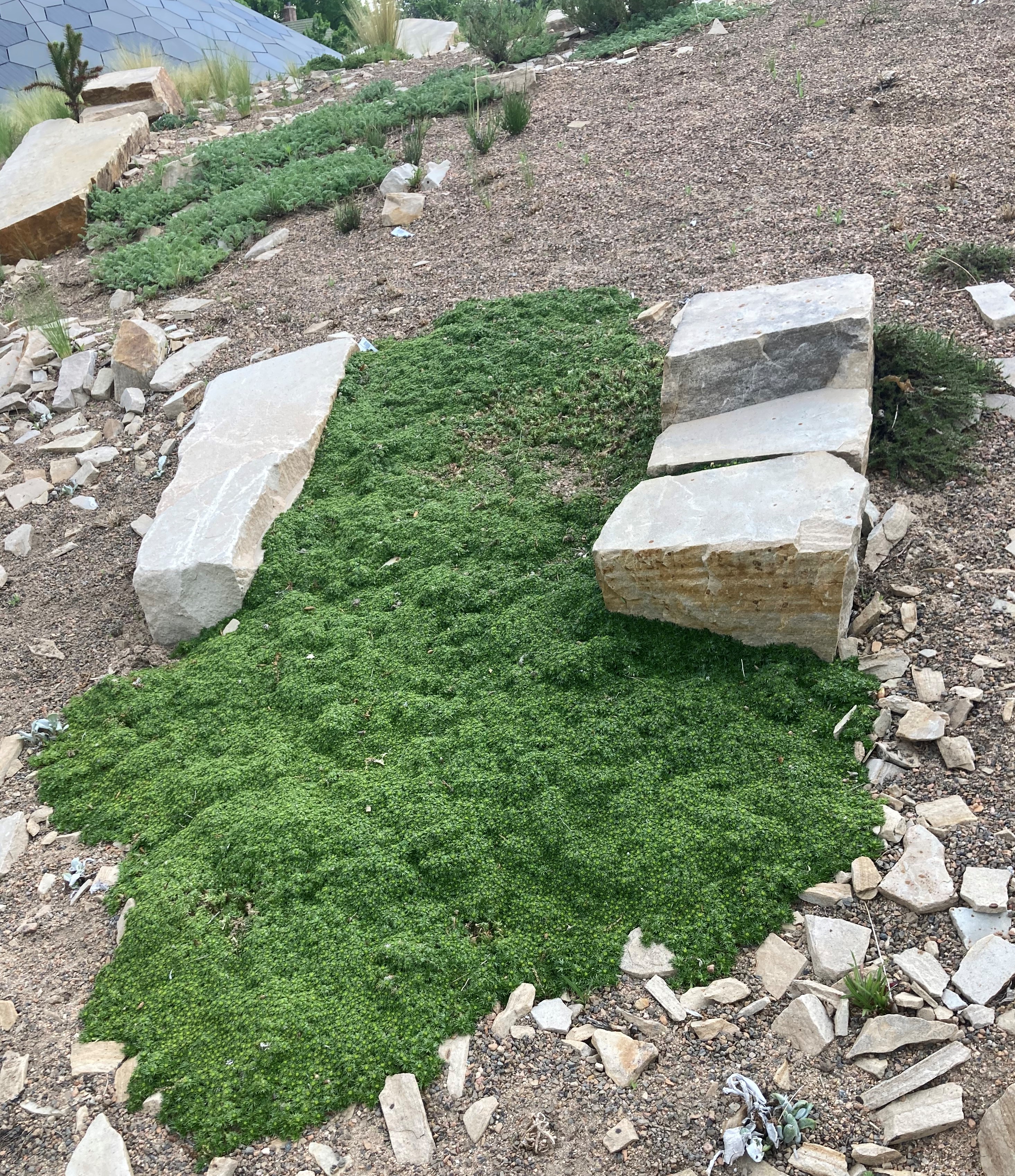
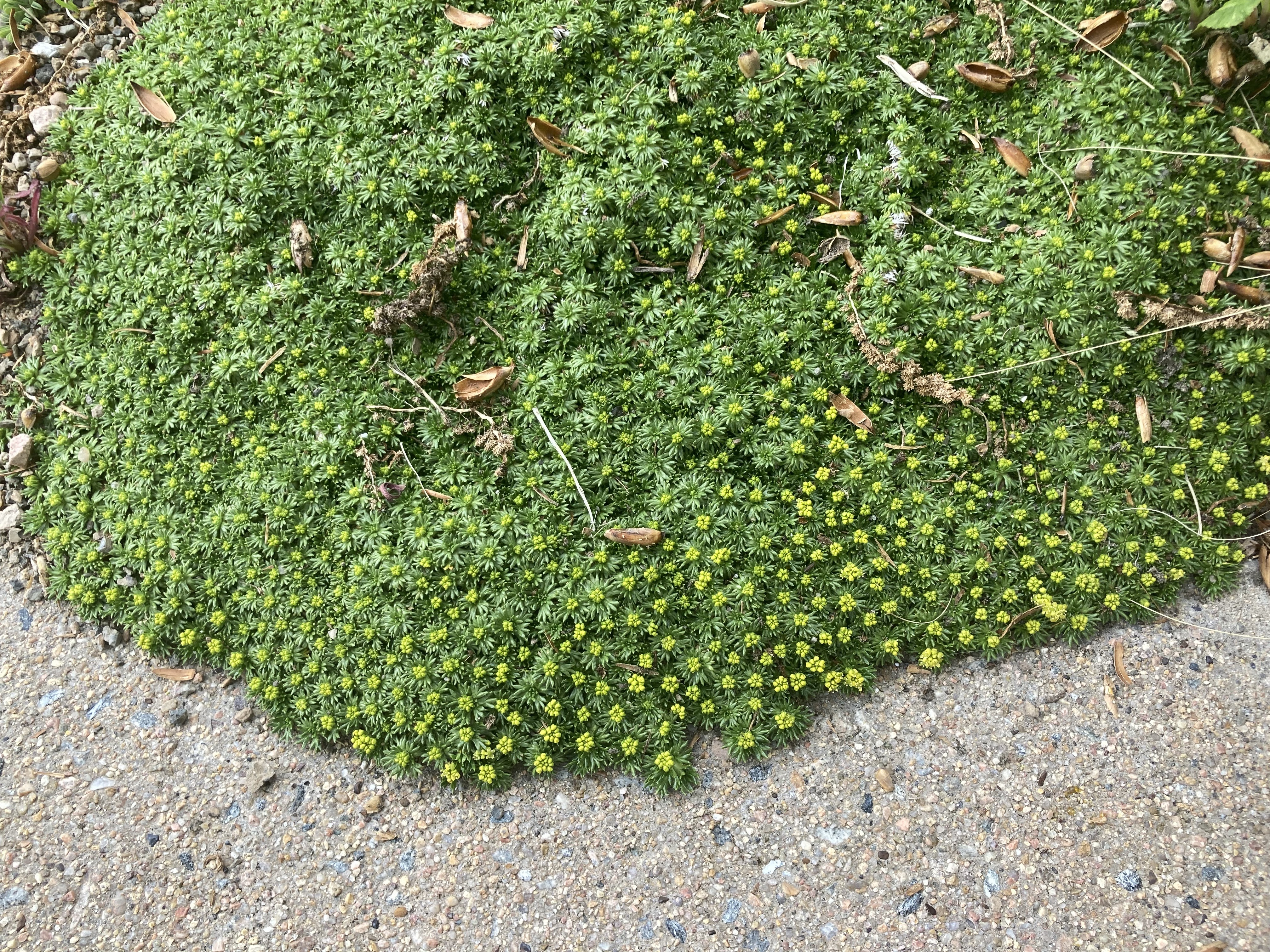
Several cushions of Bolax glebaria (or is it Azorella trifurcata now again?) compete with the petunia to make vast mats on the slope.

 |
| Sisyrinchium macrocarpum |
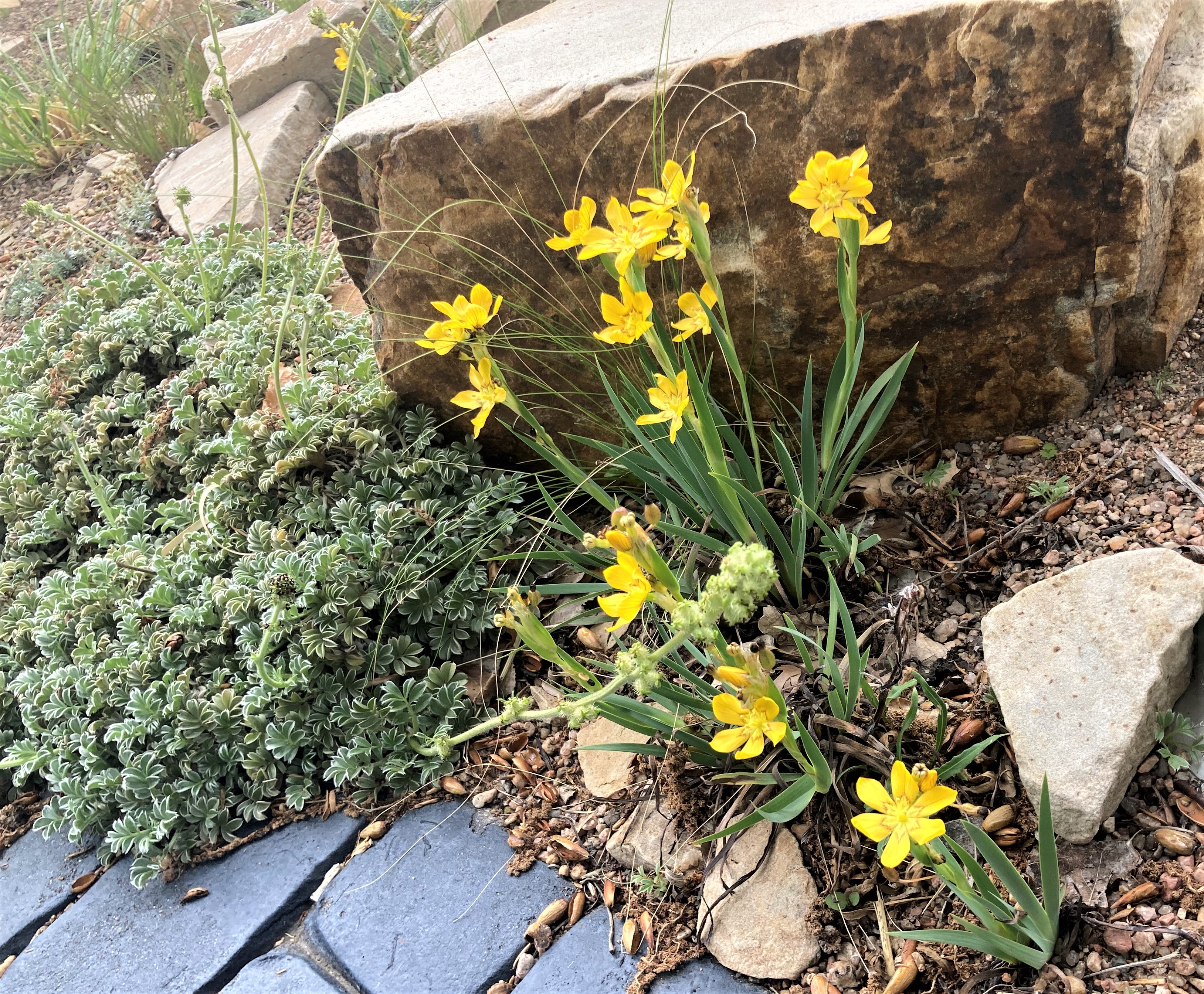
Also making a spectacle of itself, a fine colony of this showy Patagonian irid was in peak bloom as well today: you'll be subjected to a series of pictures I took--I just love this plant!

 |


And quite a few clumps of Armeria magellanica (I think they're lumping this with North Temperate A. maritima as well).


An overall shot showing the characteristic cushion growth of so many Patagonian plants.
 |
| Oxalis squamata |
Last year there were dozens (or more) clumps of this all over the Garden: I believe they went on a rampage to eliminate it--but I'm glad a few escaped: this is a weed I could cherish! And since I bought one from Wrightman's Alpines, I too may be weeding it out soon!
 |
| Araucaria araucana |
If someone told me years ago that there would be Araucarias dotted on the Patagonian slope of a Steppe Garden at DBG I would have been shocked. Each year a few succumb, but several are hanging in there: not quite ready for street tree planting in Denver yet!
 |
| Viola cotyledon |
Denver Botanic Gardens has not only produced the most ambitious Steppe Garden in existence (to my knowledge)--remember this is just the Patagonian section--and a landmark book on the subject, but we have staged a series of symposia, the next of which will have speakers from eight countries representing the full spectrum of World steppe habitats!

Do plan on joining me in late July when for the first time ever, researchers from all four steppe regions (including Patagonia) gather at Denver Botanic Gardens to advance our mission of educating ourselves and the public about this extremely important biome that is so poorly understood. Click HERE for detailed descriptions of presentations and presenters and to register!
P.S. my kudos to the Steppe Garden team working with Mike Bone (including Kevin Williams and Sonya Anderson and their seasonal and intern staff) for their remarkable achievements growing South American plants: In addition to the Steppe Garden's Patagonian section, they have a large test garden at Chatfield Farms were dozens more species are being grown and studied as part of a joint research project with Argentina's equivalent of the USDA (I.N.T.A.: Instituto Nacional de Tecnologia Agropecuaria). The Patagonian manager of this program will be speaking at the Steppe Symposium.


%20-%20Copy.JPG)

Absolutely magnificent.Great armchair travel. Do Alstroemerias make it down to Patagonia ?
ReplyDeleteWhat does Denver Botanic Garden use to grow their alpines. Where do they get it?
ReplyDeleteThanks so much for your blogs. This one is really amazing! Carol
ReplyDeleteThe viola mystified me, how could that be a violet? I think so much of the violas in the nursery trade. The foliage is so uncharacteristic. Searching for this species I found http://www.chileflora.com/Florachilena/FloraEnglish/HighResPages/EH0235.htmThere are lots of links at the page's bottom to other violas, equally so unique.
ReplyDeleteThank you!
I’m green with envy over those delightful round mounds of Petunia patagonica! Maybe one day it will find its way to my garden! I bet it would do well in the PNW. The rosulate violas, on the other hand… not so much. I doubt if we have enough sunlight to get them to flourish ins their compact glory.
ReplyDelete