Showing posts with label Salvia 'Raspberry Delight'. Show all posts

Wednesday, October 9, 2013

Hummingbird magnetism and not so scruffy Scrophs...among other germane subjects.


Scrophularia macrantha (closeup)
You will simply have to conjure up a picture of a hummingbird sipping away at this--I'm no Pat Hayward who seems to have no end of closeups of hummingbirds (my few are blurry)...but suffice it to say "red birds in a tree" is an example of a hummingbird magnet, as well as a Plant Select choice--this one from 2008: although High Country Gardens had begun to sell it much earlier (1996?). David Salman is also responsible for the amazing common name (the plant is anything but common in nature). If you click on the link in the previous parenthesis you will see it is clustered in a very tiny area, mostly Luna County, New Mexico, where I collected a few capsules on a field trip on Cooke's Peak at about 7500' among the craggy Arizona Cypress that have their  northeasternmost geographic and altitudinal extreme at that point (we got seed of those for the first time that trip as well)...
Scrophularia macrantha dwarf form (At Kendrick Lake)
This post has many themes, the first of which is to commemorate my drive up to the end of the road on Cooke Peak, a trip my brother-in-law, Allan Taylor, and I undertook exactly twenty years ago this autumn. I wish I could clone myself--one of my clones would immediately set off for Southern New Mexico where they have had torrential monsoons this year and make my way up Cooke Peak and see if any Scrophularia are left there:  Come to think of it I did go back five or six years ago with two of my colleagues named "Mike" (I've had about twenty with that name--not so helpful a hint)...and I didn't find Scrophularia that trip. And the Cypress were mostly dead from a severe drought that occurred much of the spell between my two visits....there are botanists who would have objected to my collecting the seed back then (albeit it was on private land and we had the owner's permission): and that population may be gone. Instead, I shared seed with Kew and David Salman and grew it as well--I wonder just how many gardens it's growing in now. I'll bet it's in the tens of thousands! All from a few seed capsules.  The picture above is from a very compact plant that persisted for several years at the Gardens at Kendrick Lake--cuttings did not stay small like this--it must have been the spot!
 
Scrophularia macrantha growing in a median strip in Lakewood
I took this picture "on the move" once through Lakewood when I saw this monster specimen growing in the middle of Alameda Boulevard--Greg Foreman has used it all over that fair city--I am astonished it has proved so hardy coming from so far south. And it can get monstrous in the right soil and site--this one had to be 6' tall! You will often find hummingbirds buzzing specimens like this throughout the summer--which brings up my second theme: the wealth of hummingbird magnet plants introduced by Plant Select (and High Country Gardens) over the last two decades have truly altered the feeding habits of these birds: many birders have noted to me that hummingbirds (which were seen throughout most of the 20th Century for a few brief weeks in Denver come spring and fall)--now can be found much of the summer!
 
Salvia x 'Raspberry Delight'
(S. greggii x S. microphylla v.wislezinii)
Can you blame them when we put out banquets like the Salvia above--which is still blooming madly even after a pretty heavy frost last week. This is the toughest of the greggii types--and OUGHT to be in Plant Select! It is a distinct shade that differs significantly from the two stalwarts already in the program: Salvia greggii  'Furman's Red' and 'Wild Thing'. I grow a dozen cultivars in this complex--and would love to have many times that since this group of salvias blooms for months and is extremely drought tolerant!

I should append no end of penstemon pix right now (pseudospectabilis, eatonii, pnifolius, barbatus, cardinalis, havardiana, rostriflorus, x Mexicali cvs. etc. etc.--many of them already Plant Select and some still in the wings): all of these are favorites of the hummingbirds as well--no wonder they linger in Denver! By the way, they really began to come to the city in droves in the summers of 1999-2003 when drought conditions in the mountains were so severe in the summer that flowers ceased blooming at altitude, but continued in our gardens: did we inadvertently help hundreds of hummers survive the drought? Have we interfered with nature? If so, do those who put out bird seed "interfere with nature"--that's the birder equivalent of gardening perhaps. Which was the more culpable act? Plucking a few seeds two decades ago? Or planting plants that lure hummingbirds to a range they did not once occupy? The morally pure would decry both actions...but in the grand scheme of things, both are trivial compared to the aboriginal humans' causing the extinction of hundreds of taxa of megafauna across Eurasia and the Americas (and all the islands from Madagascar, Mauritius,  Melanesia, Australia, Hawaii New Zealand etc. etc.--where we have and continue to wreak havoc).

Zauschneria garrettii (on Idaho/Wyoming border near treeline)
I finish with two of the ultimate Hummingbird magnets: most botanists insist on calling Zauschneria "Epilobium" and I have no doubt they are closely allied. DNA may even demand we lump the two. They differ so much in habitat (Epilobium is largely mesic in its habitat preferences while Zauschneria is xeric--and they have distinct distributional patterns in nature--Epilobium is primarily Holarctic, while Zauschneria is Madrean...) and I always say if hummingbirds can distinguish the two genera, perhaps they know something botanists don't! I'll go with the hummingbirds! On the subject of folly--it's funny to think zauschnerias are regrarded as "tender" when the germplasm that resulted in 'Orange Carpet' was collected at nearly tree line on the border of Idaho and Wyoming: "California fuchsia" you say? HA! More like "Wyoming scarlet willow herb"--Yeah, right! I suppose some "botanist" may coin that cognomen some day...gag me with a Dasylirion (desert spoon--get it?)


Zauschneria arizonica with Eleni Kelaidis
This picture was roughly the same time I took that fateful field trip with my Brother-in-law...I shall end with a picture of him. But I couldn't resist this shot of my adorable daughter taken around 1992 in September at our old home on Eudora. Thank God for cameras and pictures (and good volunteers who scan old images!)...Thank God for hummingbirds and Mother Flora while I'm being grateful.


Allan Taylor and Yucca elata
That's Allan (on the left of course...): you'd never guess he was 80 years old when I took that picture a couple years ago. Apparently, being a great Linguist (he is an authority on many Indian languages and speaks a dozen or more other languages quite fluently), a passionate and inspired gardener (and arborist), having five wonderful children and being a rabid Left-winger and proselytizing Atheist (and just generally a polymath and bon vivant) contributes to long and rich life...we have Allan to thank for the trip up Cooke peak where Scrophularia macrantha was introduced (and a good deal more...). We have Allan to thank for many other great plants in cultivation as well--(I feel another blog post dawning I should add to the pipeline!) I have done over 500 blog posts for Prairie Break and Denver Botanic Gardens over the last decade: strange that I have never acknowledged my enormous debt to Allan, who got me gardening as an eight year old...over a half century ago! Better late than never: Live long and prosper, Мой возлюбленный зять!


Saturday, August 10, 2013

Alphabetical August stroll through my garden, and why not?

Abronia fragrans
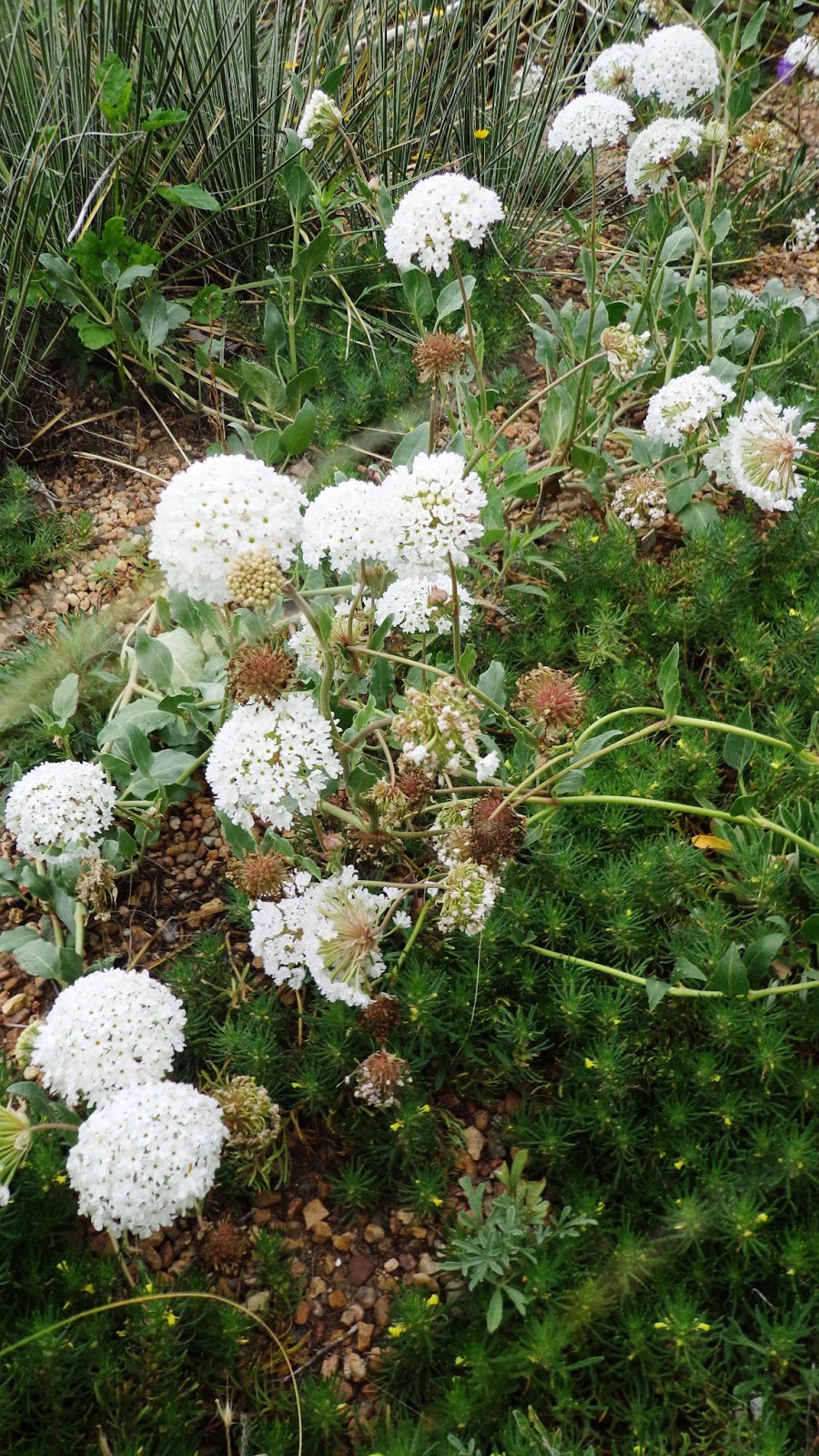
One of the unintended consequences of working at a Library in college is that you learn how to alphabetize easily. My buddy Bill Adams (a banker, for God's sake!) is horrified that I planted my Arilbed irises on East Ridge IN ALPHABETICAL order: should I have done it phylogenetically, Bill? At any rate--I  already labeled these pix from the last week--and they're in alphabetical order-- Starting with the universal sand verbena of the West. It grows natively in little prairie remnants near my house: I can't remember where or how I got these, but they have enlivened West Ridge for over a decade, popping up here and there. With the monsoons this year this display has been heavy and protracted. For an hour or two in the evening the smell is powerful and sweet (and strangely acrid too close)...nevertheless, a plant I love and wish were more widely grown.


Abronia fragrans


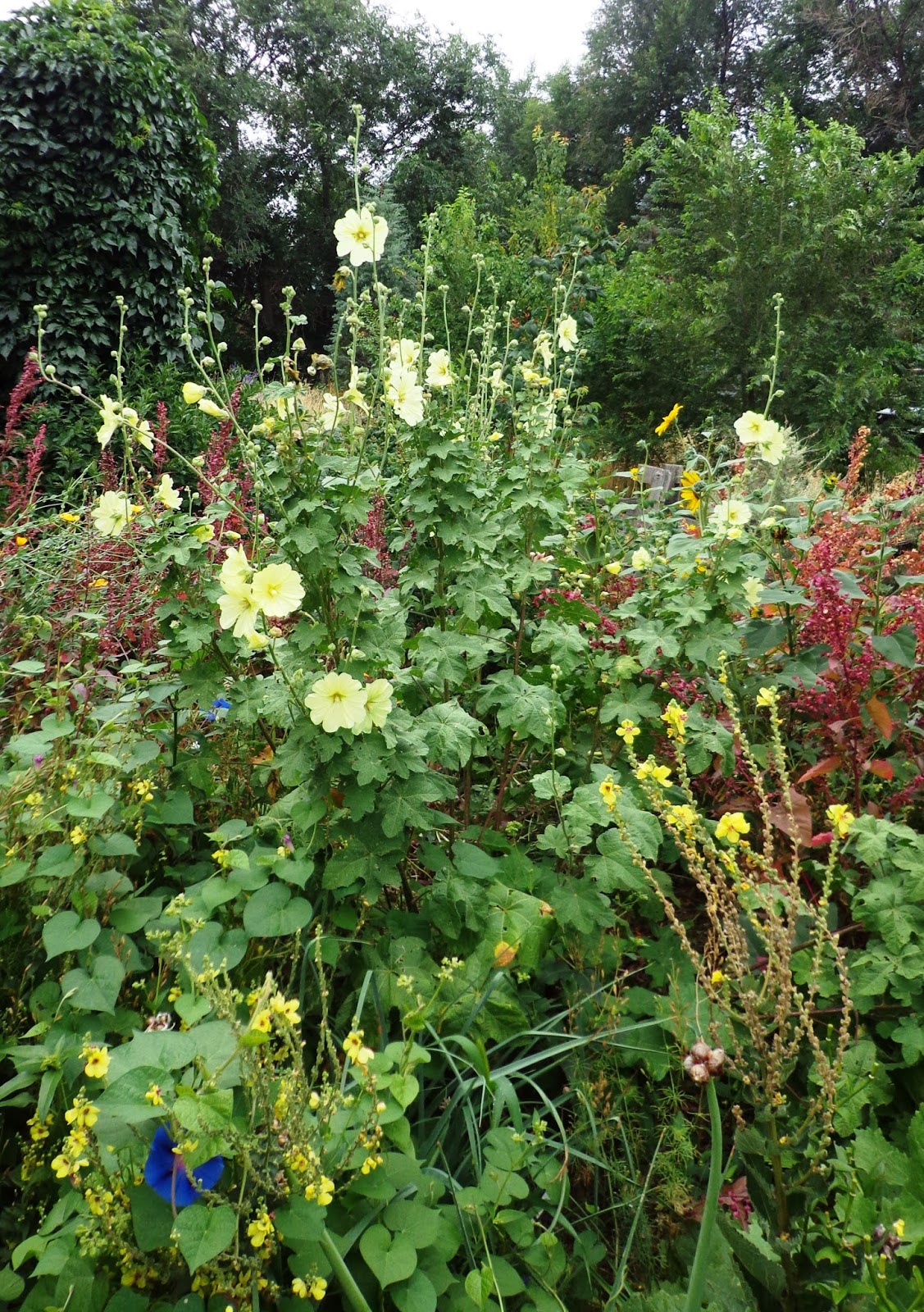
Alcea rugosa
I struggled for years to establish this in one of the drier corners of the garden, but Jan plunked it in her border and it's going gangbusters. Life isn't fair! And it must like a little extra moisture...


Allium prostratum
First of all, it's not prostrate. It's cuter in real life than in the picture. Waiting for a comment from Mark...

Amorphophallus konjac
Over a meter across--I can't say how proud and pleased I am that this classic came through last winter. A gift of J.C. Raulston arboretum--one of my all time favorite spots...


Beesia deltoidea
This was purchased at a local garden center, thanks to Monrovia. Now if it will only settle into the garden...


Campanula coriacea
One of dozens of incredible campanulas from the Caucasus and Turkey that are little known. It picks a good time to bloom...

Campanula fragilis var. cavalinii
Queen of midsummer campanulas, this is the much hardier subspecies introduced by Votech Holubec--one of the most traveled and accomplished gardeners in the world.

Clematis integrifolia ex Lake Baikal reblooming
A random seedling of this dwarfer form of integrifolia--and it's a good rebloomer.

Escobaria vivipara
This picture is almost life sized (assuming you're looking at it on a laptop and not a phone)--I lost track of which subspecies. But the enormous flowers and late bloom rate highly in my book...


Gladiolus 'Atom'
This was hardy several years at DBG--this is my first summer with this, but it's already become my favorite Glad...unless flanaganii decides to overwinter.

Incarvillea sinensis
I'm not sure what to make of this lacy thing---it's decided to grow with various tiny morsels in my rock garden--but it's not really in scale..but the fine tracery of the foliage and the outrageous flowers argue for leaving it...

Incarvillea sinensis closeup
The flowers are really delightful close up...

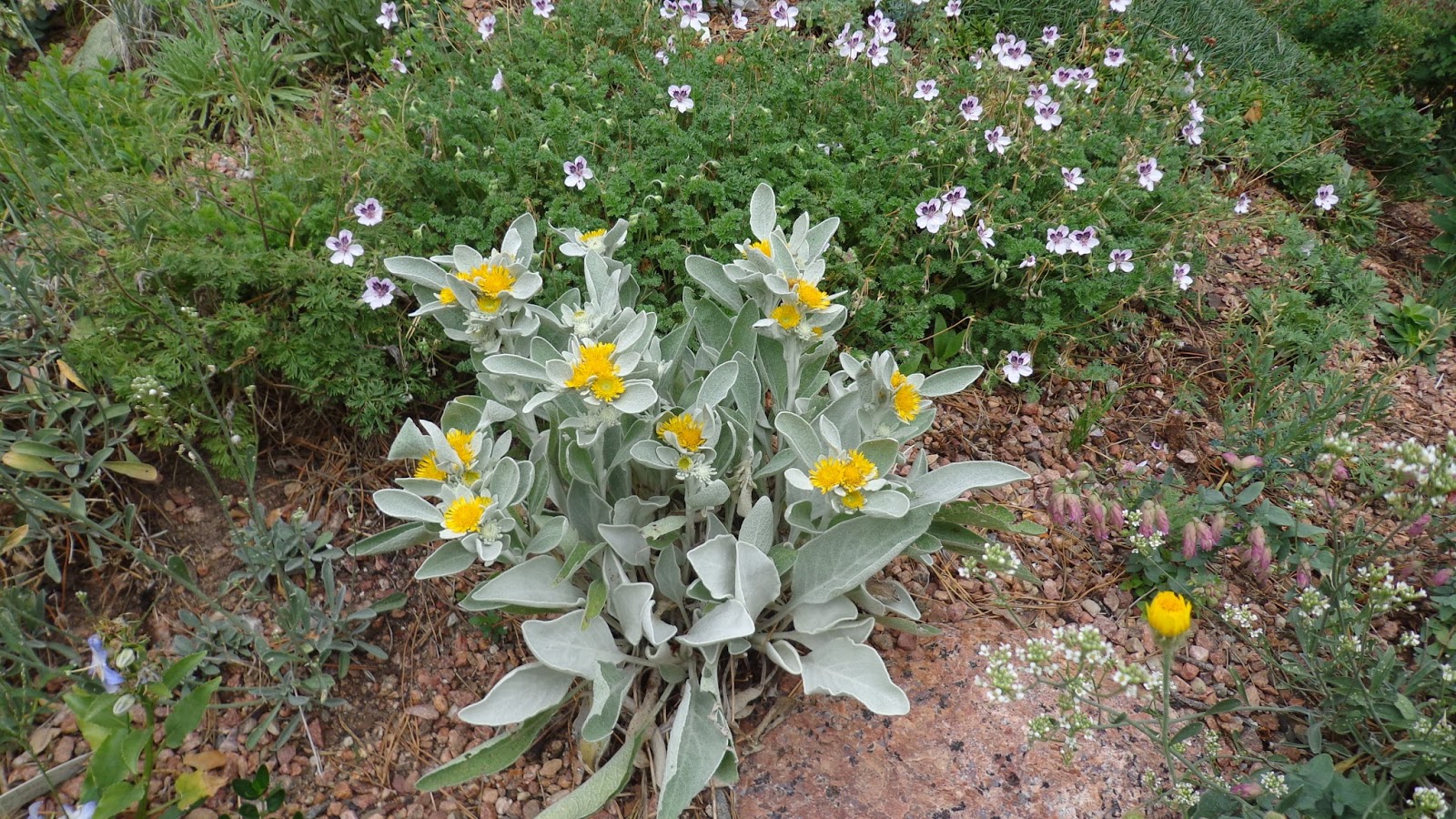
Inula verbascifolia
From Mt. Olympus--reason enough to grow this Inula. The foliage does look ridiculously like a verbascum...it loves my garden and seeds just enough to perpetuate itself and share a few...

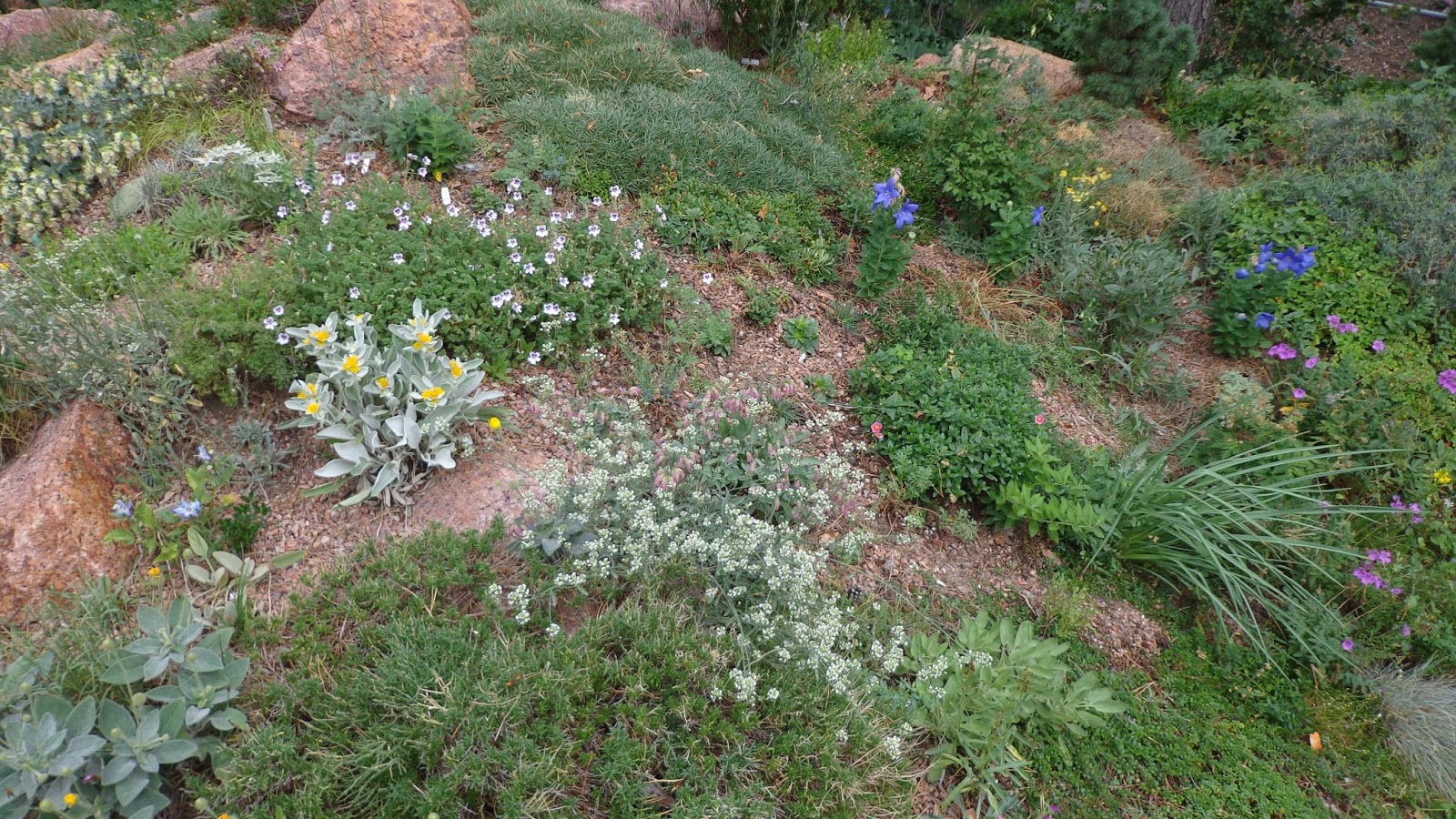
Inula verbascifolia
From further back so you can enjoy its contrast to Erodium--rapidly becoming one of my favorite genera...erodiums never quit blooming,and their foliage is gorgeous and evergreen. What's not to love?
Leontopodium alpinum
Good ol' Edelweiss...now to get all those Himalayan forms again I've grown over the years...


Lilium concolor
The flowers are awfully small for a lily--but with that color, who cares?


Lilium concolor
Pictures taken at two times of the day show the way the flower color morphs in the light from orange to crimson. I would like to grow every species of lily one day...

Mentha longifolia
One mint I would never want to be without. Not just because it ranges from Africa to the Himalaya--but the silvery leaves make a wonderful contrast to the pinky-lavender flowers, and the smell! Not as impossible to control as most mints.

Monarda 'Lambada'
Looks as though it's finally settled in--this Western annual pops up here and there, much more compactly in the dry garden. I love it...and its smell.


Opuntia sp.
Possibly a form of O. cycloides from Big Bend, this is currently my biggest Opuntia. Bigger ones on the way!


Penstemon barbatus (flesh colored)
I don't know if I love or hate this color.


Platycodon grandiflorus (dwf. pink)
I was a bit disappointed the pink was so pale--but the plants love the spot I put them in--so it will probably stay put...


The Pond
Views around the garden this summer...lush with all the rain.


The scree bank in my rock garden

Another view of the scree bank 
The big screes are looking more and more like meadows. Oh well..

Closeup of the waterfall wall garden
I love the way the wall is filling in.


Pot ghetto by waterfall
One of many clusters of pots. I've overdone it as usual. I should count them up. I know they are in the multi hundreds...

Edge of veggie garden

Neglected veggie garden overgrown with Amaranth and Red Orach
We didn't plant the vegetable garden properly, but lots of goodies have naturalized, including some edible ones. I love the maroon of Red Orach and amaranth.

Path to back gate


House glimpsed through veggie madness...


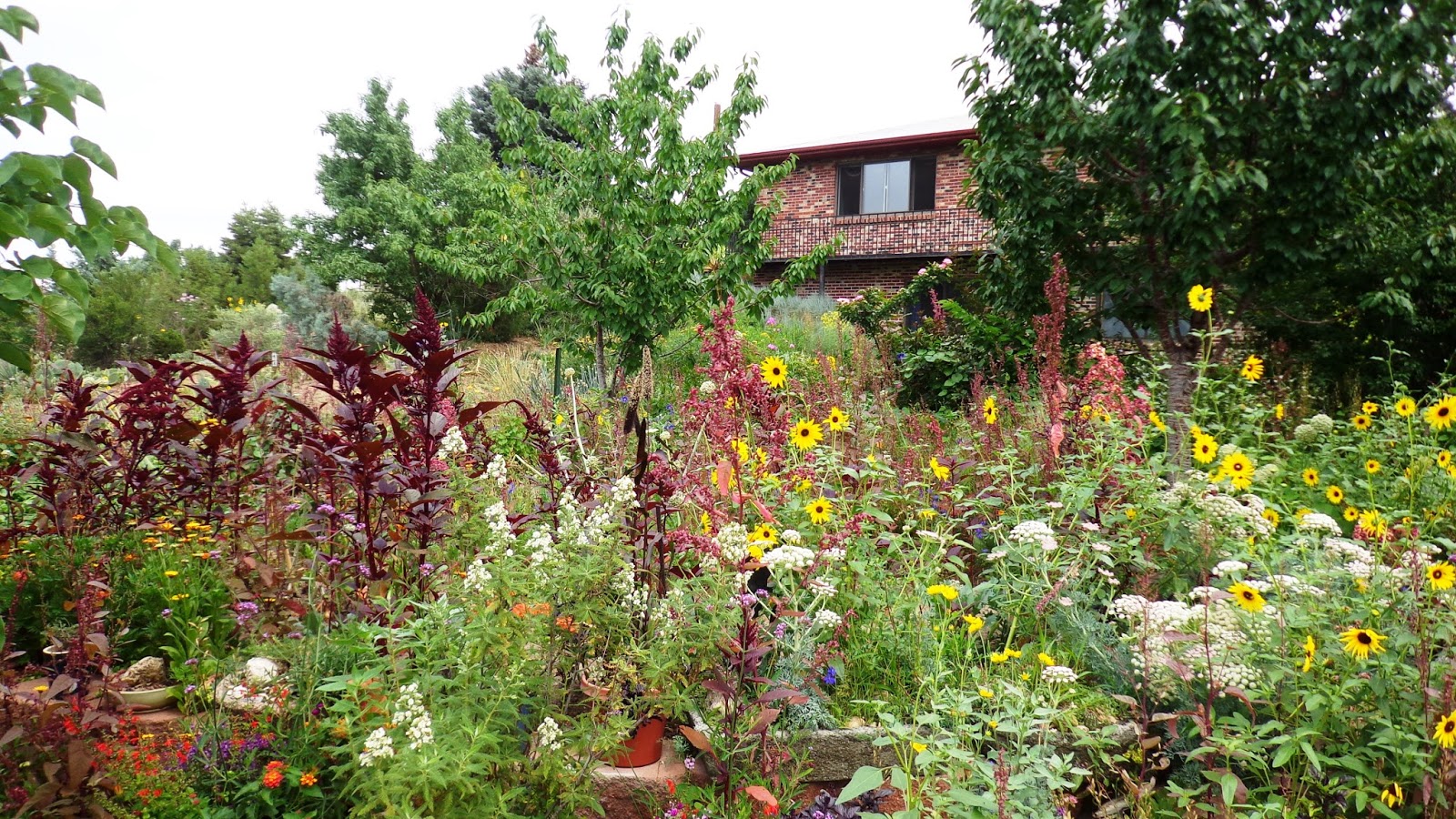
West Ridge: that's 'Snow Leopard' on the right


Path along West Ridge


West Ridge in Sunflower time...that's Salvia 'Raspberry Delight'--the toughest greggii type
Just views around the garden--subtle, but easy to live with!


Salvia 'Raspberry Delight' (S. greggii x microphylla v. wislezinii)
By far the toughest of the greggii-type, 'Raspberry Delight' blooms heavtily for a week or two after every heavy rain--which means all the time this year!


Closer view


Closer yet!


Saponaria x lempergii 'Max Frei'
Another stellar performer--albeit the spot it's growing in is a tad dryish for it....the rains compensated this year and it's doin' its thang...

Trough with Talinum rugospermum
This little known succulent from the Midwest is a wonderful addition to troughs for summer interest. Seedlings are many, but easily pulled (and transplanted)...


Closeup of same


Uvularia grandiflora in seed
This Uvularia is so gorgeous in bloom--but even the seedpods are cool. Seed sheds while moist--not one for the exchanges I fear...

No pix of zauschneria or zinnia--sorry! That's it! Gotta go garden--see ya later...


Monday, October 8, 2012

Shazaaaam!


A highly impressionistic, shall we say, depiction of the "hard frost" that was supposed to occur last Saturday night. It did drop to 28F, and fried most Coleus in exposed spots, as well as Basil and Salvia fulgens. But, like Superman, the Southerwestern "Autumn" sages (S. greggii and S. microphylla and their kin) revealed their true, mountaineer souls by coming through pretty much unscathed. That's a seedling S. greggii above that decided it wanted to grow in my pathway: so be it!


This is the real gem of the bunch: Salvia 'Raspberry Delight' represents a hybrid between Salvia microphylla ssp. wislezinii (a.k.a. Salvia lemmonii) and a greggii parent, produced by David Salman several decades ago: this has been far and away the toughest, most cold hardy and just plain wonderful of the autumn sages in my garden. I have it on my unwatered xeriscape where it must have several hundred thousand flowers right now, and this specimen that gets more shade near my rock garden--and still blooms prodigally for almost six months.


This "artsy" shot with backlight gives a bit of a flavor of its piercing purple-magenta flowers. Pictures (and I have taken dozens) can't seem to really pick up the right hue. It is wonderful! David tells me he has a plant that is even an improvement over this. I look forward to trying his new gem--but meanwhile, I treasure my 'Raspberry Delight': if the greggii/microphylla salvias are tenderish for you, try this one. I have a hunch it can even survive Zone 4 in a sufficiently dry spot....

Featured Post

Crime pays, gardens don't.

I apologize for "borrowing" Joey Santore's tagline--but it seems appropriate. And I think Joey would approve. What if I were t...

Blog Archive