Sunday, November 25, 2012

Untimely daffs...

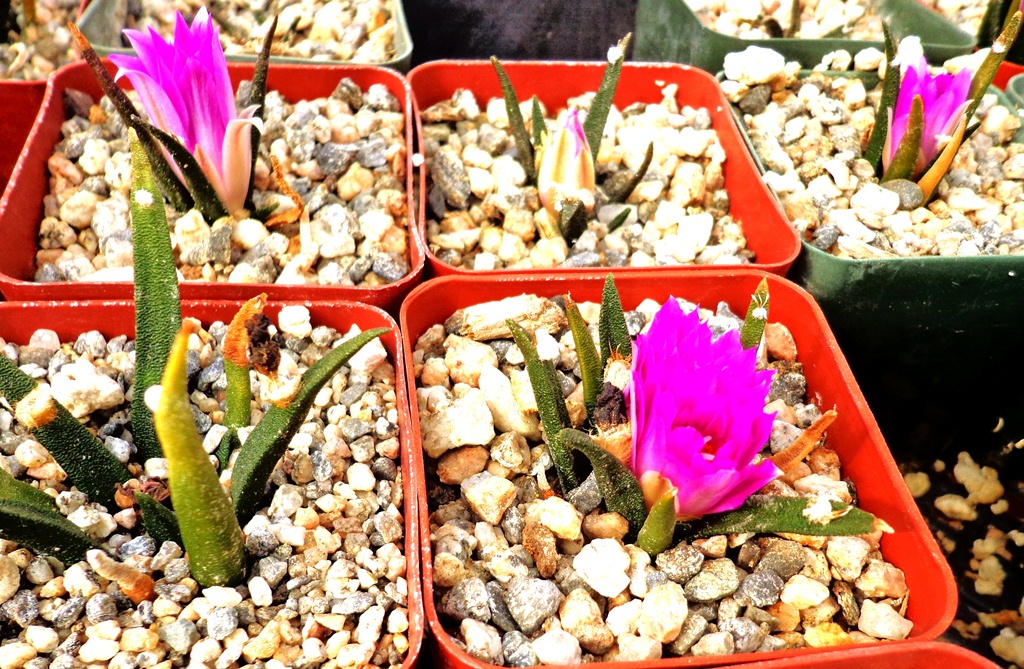
Narcissus albidus v. foliosus
 
If it were not for the seemingly endless variability of Mediterranean bulbs (and those from Central Asia and other bulby places too I suppose) winter would be very long indeed. I only obtained these two morsels in the last few years, both blooming cheerfully the last week of November! We have had numerous hard frosts, and the temperature at night has not been much above freezing most of the last month--with one or two nights dipping into the teens. This has not been through a winter yet, but N. cantabricus below did go through last winter.

Narcissus cantabricus

I visited Savill Gardens in Windsor Great Park in April of 1981 on an enchanted late afternoon--there were hardly any visitors there, and the bright day was gradually turning golden with late afternoon light. Long will I remember the bright pink petals of Magnolia campbellii floating down ever so slowly, and the streamside planted thickly with Lysichiton (camtchaticum over there, americanum over here) amid drifts of Primula denticulata and other early spring goodies....But what really dazzled me was how each dell and hollow was planted to its own subspecies of Narcissus bulbocodium...a brassy pale yellow one growing by the million in this clearing, a brilliant yellow dominating a meadow a bit further on. Seemingly dozens of kinds of hoop petticoats thriving and spreading into innumerable quantities, all growing completely happy, and in peak bloom. I am curious if there are not a meadow or two there for the late autumn and winter blooming white ones? I shudder to imagine a copse filled with one of the petunioides types!

 
Meanwhile, I am more than content with my little tufts here and there of some of the variations on this remarkable group of Narcissus. One day I must return to Savill Gardens--surely one of the finest gardens in the world. And perhaps one day I shall visit the heights of the Guadarrama, the Picos and the various Sierra where the bulbodocium section grows wild.

Tuesday, November 20, 2012

Odd couples. Unique pairings. Kooky combos.


Lovers of perennial borders are always seeking out wonderful ways of combining plants. Rock gardeners are notorious for their love of the cameo shot: and I'm a culprit in this arena. I have taken tens and thousands of mug shots of plants...finding two together in my image collection is a challenge--and when you do, what strange and mysterious things result.

I don't believe I have flaunted this one on this blog before: Paeonia cambessedessii was just moved from this spot (where it has not bloomed quite as well since I took this picture four or fice years ago.) And the Gentiana acaulis dwindled in this spot--but the Daphne cneorum 'Album' behind is bigger and better than ever, thank Heavens! This patriotic combination caused just about every visitor I led to it to glare at me with envy. Those are the moments gardeners live for.


Where else will you see Allium schubertii combined with BOTH Monardella macrantha AND Sedum rupestre 'Angelina'? I take credit for the picture, but the combination is Dan Johnson's in Yuccarama at DBG--tucked behind a wall where few sensitive souls are apt to see it and swoon. If they do, they are apt to fall into the prickly arms of
Yucca rostrata.

Don't look for either of these plants at Walmart, incidentally. The Sempervivum is 'Gold Bug'--one of the yellowest of its motley tribe. Those single rosettes are framing Rhinephyllum sp. --possibly a new species that I obtained from Steve Hammer of the Sphaeroid Institute. This miniature combo is primo every day of the year (although the Mesemb only blooms for five or six months). It is a dainty morsel that answers the question "why build a rock garden?"...


I took this picture in early July of 2009 on an enchanted trip to Kazakhstan led by the indefatigable and magnificent gentleman Vladimir Kolbintsev [possibly the best all around naturalist I have ever known, and a boon companion] for Greentours: the picture was taken on a remote corner of Mongolia (the only place we visited in that country not overgrazed--too far from any villages you see)...and the plants are a monstruose form of Rhodiola rosea and the ubiquitous Eritrichium pauciflorum of that area. Such is the stuff dreams are made on (for plant nerds anyway...)


Another unlikely (but wonderful) combo: Trollius altaicus rising out of a slightly less monstruose clump of Rhodiola rosea....
 

I finish with the most outlandish combo of all: myself and my girlfriend Jan Fahs--the beauty on the right (in case you were wondering--next to the beast on the left) at the Fete des Fleurs gala last summer at Denver Botanic Gardens.

I shall probably still take mug shots of alpines and rock plants...but I shall also try to find companions for them--for plants no less than people do not exist in a vacuum. And they often look (and grow) much better paired. I can attest to that!

Saturday, November 17, 2012

Friendly strangers

 
There's really nothing so very strange about the "Persian candytufts" (Aethionema)--although their name derives from the ancient Greek "aethes", which means strange. They are foreign to most gardens since these are quintessential rock plants. And one of the many good reasons to have a rock garden. I've noticed over the years that the best rock gardens usually feature plenty of these, and not to brag too much, mine has more than most. Here some of innumerable Aethionema grandiflorum in my garden (the form once sold as A. pulchellum--and certainly different from the A. grandiflorum I have grown from wild seed: botanists! get your act together!). This forms a miniature, gnarly shrub in time, and lives forever, and grows vigorously provided it is not too wet or too shady. They do pop up everywhere for me: I have a problem weeding them out, so I seem to have a few more every year...oh well.


Most Aethionema are pink, but I obtained this white one years ago from one of the Czech collectors and I believe it is A. iberideum from Turkey. Alas, it does not produce seed and if I don't propagate it soon from cuttings we may lose it.

 
This diminutive and very prostrate Aethionema glaucescens would be welcome in the more intimate crevice garden or trough--much more manageable than its sometimes robust cousins. It generally stays under two or three inches tall--although it can eventually get six or eight inches across.


I believe this is the true A. schistosum: over the years I have received a half dozen very different plants under this name. This one is a good pink, and almost as compact as the last species. I recommend it wholeheartedly for the small rock garden or trough!

 
In my experience, Aethionema subulatum has the darkest pink flowers of the genus (so far). It isn't the smallest species, but does not get as large or seed as much as A. grandiflorum. I am surprised this very lovely plant has not gained currency.


As you can see, I like it enough to grow lots of it in my rock garden (which is not infinite in space...)


One last glimpse of it: there was a time when pinks and pale blues--all the pastels--were the rage and the norm. At this time, the brasher "jewel-tone" reds, oranges and bright purples have elbowed these gentler pinks out of fashion. Those of us who dwell with the eternal verities don't pay attention to such nonsense: I love all colors including baby pink and rich rose! So what if they aren't "manly" and overstated! Everyone should cultivate their sensitive side (sniff sniff).


There are really dozens more Aethionema (I've grown far more than these--but hesitate to try your patience). They are much of a pinkness, after all...but if I were to be told to grow only one, I think I might pick Aethionema capitatum, pictured above in my rock garden. This was grown from seed of the plant below--check it out!

I took this picture five or ten years ago in Bill Adams wonderful rock garden in Pueblo. This same plant today is a gnarly bonsai (with a trunk bigger than your thumb, and an almost tree-like form and shape--less than a foot tall and not much broader. It blooms for a month or more at the height of spring and in early summer. The seedpods are appealing, and the foliage beautiful blue the year around. Like all aethionemas, it is very drought tolerant. I grow some with no supplemental irrigation. This one stands out!

It is strange indeed that such charming plants that provide so much beauty with so little fuss are still strangers to so many gardens...how do we change that?

Wednesday, November 14, 2012

Prickly business: a Southern California specialty nursery


Southern California might well be considered the Mecca of all cactophiles: Mexico may boast the largest number of species, and of course South Africa postively bristles with succulents (albeit not cacti), but Southern California boasts dozens of dazzling public gardens displaying fantastic succulent collections (not just the Huntington, btw), and more specialty, wholesale, and retail nurseries growing and selling succulents than you can shake an ocotillo cane at. I was lucky enough to visit several of these during my recent lecture tour: I was captivated by Prickly Palace. The picture above was not taken at that palace, exactly, but in the private garden of the owners...an absolutely astonishing garden full of all manner of spectacular specimen succulents grown to perfection. As I looked up and down their street full of conventional gardens (lawns, blobby bushes) that could have been in New Jersey or Idaho (whose owners pay untold thousands of dollars to keep their dullish gardens surviving on life support) when they too could have a desert garden full of beauty. Are people nuts or what?


Buck Hemenway (above) and his wife (whom you shall meet shortly) started this nursery to support their serious addiction to all things succulent. I must qualify in the latter category, since they were very hospitable during my recent visit. Here you can see Buck pulling aside one of the many aloes and other goodies he gathered and gave Denver Botanic Gardens for our collections (gratis, incidentally). In addition to being a nurseryman, Buck has dedicated countless hours in service to many affiliates of the Cactus and Succulent Society of America, as well as serving on the National board of that organization in many capacities. People like him are the ones who keeping the flickering flame of civilization glowing.


A glimpse of one of their growing areas, this one featuring all manner of cacti--in all sizes. I suspect many of the plants you see are specimens they are growing and perhaps grooming to put into one of the innumerable Plant Shows sponsored by CSSA throughout Southern California. Buck and Yvonne are frequent (and extremely successful) entrants in these shows. Moreover, they usually sell plants at them as well. Buck is likely to be conducting the auction at one of these meetings (he did so at two I happened to attend), to which they donated many of the best plants. And, oh yes, Yvonne will be outbidding others at the same auction...I think you call people like this "players".


One little corner of one of their houses where they cluster their non-cactus succulents...we shall take a a closer look at that out-of-focus red blur in the foreground next...


Here is Yvonne, a full partner to Buck in the business. I think her smile speaks volumes. She is accompanied by Monadenium coccineum, a delightful, everblooming succulent in Euphorbiaceae. I notice I brought one of those back (the plant, not Yvonne silly!). I enjoyed chatting with Yvonne about many things, especially the wonderful plans she and Buck have to move to Calitzdorp, a village in the Little Karoo of South Africa in a few years: their appetite for travel made me feel like a tyro.


Another flashy succulent I found there--a spectacular cultivar of Adenium. It's amazing these are not more often seen as house plants!


They had extensive beds outdoors for propagating larger succulents--such as this mass of Agave. Their Aloe beds will be in peak bloom over the next rew months: I may have to find my way back there soon...

They had flats full of treasures, such as this outlandish Ariocarpus agavoides, an amazing miniature cactus that reminds me more of a Lewisia than an agave.


And of course, they had to have the requisite Golden Barrel (Echinocactus grusonii): you never know when some Chinese plutocrat might drop in looking to replace the sentinel lions on his front stoop.


My one glimmer of schadenfreude occured when Buck told me that his Delosperma sphalmanthoides (pictured here) had never bloomed. Until I realized his plant was twice the size of any I have managed to overwinter. This was growing in a special area (with many tables and some overhead protection) where they cluster hundreds--maybe thousands--of special treasures, many of them South African bulbs, which they wish to keep track of. That treasure trove merits its own Blog posting--except that my camera had trouble focusing through my hot tears of envy!

Buck and Yvonne: I salute you, and thank you for all you do for the world of horticulture and its wandering minstrels like myself. Long may your reign in your Prickly Palace--whether in Riverside county or the Little Karoo!

Tuesday, November 13, 2012

Best in show cushions and buns

 
Rock gardeners are known for their interest in alpine cushion plants. Although succulents usually summon up images of fleshy crassulas or sedums, there are several succulents that can equal any alpine in their rounded, tight mounds. I photographed this amazing specimen of Deuterocohnia brevifolia (Synonym:Abromeitiella brevifolia), a bromeliad from the foothills of the southern Andes which makes a wonderful specimen in a pot. This specimen has apparently won many a medal for its owner, here shown at the San Gabriel Cactus and Succulent Show at the Los Angeles County Arboretum and Botanic Garden in Arcadia, California on November 3. Here it takes the first prize in Bromeliad division. (It was just one of over 800 incredible specimens in that show: Plant shows, sales and auctions are alive and well in California, let me tell you: I attended several in a week!)


 And here is a terrific example of the same species grown as a virtual sphere by
Peter G Walkowiak, a dynamic nurseryman who hosted me last week, and who owns and operates a spectacular nursery (HCI Services) in Escondido, California: if you look beyond the bromeliad, you can get a hit of the hundreds of other superb specimens that he grows as stock plants (and show plants too). Kind of like a permanent plant show in his back yard! This is just one of the hundreds of amazing succulent nurseries that make Southern California a Mecca for lovers of these plants. By the way, I have seen this bromeliad growing lustily out of doors at both the Edinburgh and also Kew's Royal Botanic Gardens: one fantasizes it might grow high enough in the Andes to be hardy in Denver...one can dream you know!
 
 
 I admired Mike Kintgen's amazing pictures of Euphorbia resinosa, which forms vast colonies in the foothills of the Atlas mountains of Morocco. I was therefore thrilled to find this terrific clump--possibly six or eight feet across--at the University of California at Riverside's amazing botanical garden last week.
 
 Here you can see the plant in better context, surrounded by cacti and other succulents in their extensive desert garden...


Feeling just a tad jealous of these immense succulent mounds in California, I must compensate by sharing this picture of Euphorbia clavarioides var. truncata I took last summer at Timberline garden where Kelly is growing it outdoors: this was grown from cuttings of plants he grew from seed from my collection in 1994--surviving all these years in Colorado!

Although this is a Euphorbia, this is also a bona fide alpine that would take pride of place in any self respecting rock gardener's collection, despite its emphatic succulence, bringing two of my great loves together in one plant. I went to California expecting many things, but finding enormous cushion succulents was not one of them!

Wednesday, November 7, 2012

Plexed artistry


At the very heart of the namesake poem "Pale Fire", in Vladimir Nabokov's most lapidary and perhaps most perfect novel of the same name, these lines crystallize, as it were, the wisdom of John Shade, the wise, gray poet protaganist of the poem (and part subject of the novel). These lines resonate whenever I see something like this dried up wetland at Bosque del Apache a few weeks ago:

"But all at once it dawned on me that this
Was the real point, the contrapuntal theme;

Just this: not text, but texture; not the dream
But topsy-turvical coincidence
, ...."
 
 
Who isn't intrigued by the fractal patterns in nature--and the strange symmetry of cracking clay, or the basketweave pattern on a brass platter: I am entranced by the complicated patterning of faience or mosaic design. Fibonacci and Buckminster Fuller playing mental ping-pong.
 
"..Not flimsy nonsense, but a web of sense.
Yes! It sufficed that I in life could find
..."


This recent trip was the first time I noticed that the forked footprints of cranes and other waterfowl helped instigate the cracking pattern of the clay.
 
Some kind of link and bobolink, some kind
Or correlated pattern in the game,
Plexed artistry
..." (Pale Fire, Canto 3 line 806-815)
 
The intricate patterning of marble tiles in Saint Marks, or the shimmering gold tesserae on a byzantine mosaic, or the rich colors of Oriental carpets or Victorian carpet bedding for that matter are ineluctible "decorations" that please me (and most observers) all out of scale to their belabored detail and lack of overt meaning. Likewise the repeated patterns of our lives, the habits in our home or garden, are the day to day weave of our lives that we take utterly for granted. But shift out of the ordinary: I'm completing a week of couch surfing and visiting friends and family in South California, and those day to day patterns are shattered. One can try to forge a new pattern while traveling, but it somehow isn't quite the same. Travel is rich, and rewarding--but for me it is most alluring knowing I shall be back in the encrusted, convoluted pattern of my day to day life in only a few more days. Back to my diurnal Escher tesselation!

Thursday, November 1, 2012

Closing of the Commons: thoughtful little dawn essay


I woke up at 5:30 AM in Calabasas…not the best way to start a blog posting I know…but at least it’s true.  I’m beginning a ten day trip to Southern California, speaking to three cactus clubs, visiting nurseries and botanic gardens and attending a big cactus show and doing a bit of botanizing in the hills---at least that’s  the plan.
The place I woke up is a “Good Nite Inn”—a very low budget but clean, safe and pleasant enough motel chain right next to the Ventura freeway…my room far enough to escape the worst of the noise. I shall not waste good blog space detailing the several hours of confusion and delay (my Travelocity reservation had not gotten through to the “Inn”—and it took five or more interminable telephone calls [some simultaneous with the same music on hold--several to Indian subcontinent {where my daughter is wandering about} call centers {she’s not at these}] taking much of my first evening’s time to straighten things out).  Fortunately, the landing in late afternoon light (with giant Sweet gums scattered generously across the L.A. Basin like crimson lollipops or gumdrops next to the soaring palms and other generic green blobs) did much to buoy me up for subsequent travails.
Bruce Chatwin traveled compulsively (and probably traveled well)…he stayed in friends’ castles in picturesque valleys—and still fretted and rankled and had to leave after a week or two (just read two biographies of one of the best English writers of the last century dontcha know).  In startling contrast, I stay at Good Nite Inn—and am determined to be productive and not to fret a la Bruce…
But several things are dancing on my brain I must share: The Northeastern U.S. is reeling from Hurricane Sandy: it underscores our enormous dependency on 1) technology 2) one another 3) government. Coming less than a week before the Presidential election, I am pondering the implications of storm, spin and politics.  The sudden chumminess of Governor Christie and Obama fill the airwaves.
A friend I am very fond of sends me long email essays disparaging Obama and celebrating his opponent: I respect my friend enough to force myself to read these even though I intensely dislike the tone although I comprehend (and even occasionally agree) with some of the gist—without budging one iota from my almost genetically blue politics. Peter (for that is his name) is brilliant, and there is a diamantine kernel  of good sense in his ramblings—one that I believe the Democrats can honor better than the Teapublicans.  But this adds another layer of thoughtfulness to the morning’s coffee…..
Speaking of which I drove a city block down to McDonalds (where I was persuaded to get a $4.50 combo rather than a $1.00 coffee, $1.00 potato and $1.00 sausage McMuffin because it was “cheaper”—at six thirty one does not want to argue, so I paid an extra buck fifty for some egg in my McMuffin): yet another layer of thoughtfulness: the focus of big business nowadays is how to nickel and dime customers while bad mouthing government which has to bail out businesses (not to mention a third of America’s population this week).  What do you have to say to that, Peter?
But what concerns me most this morning is how botanic gardens across America (and the world) are abandoning their mission of exploring for, collecting and displaying plants to march in locked step in a new “conservation” agenda that seeks on the one hand to restrict commerce, stymie horticultural research while on the other hand imposing  scads of new regulations and rules and protocols without, of course, providing any additional resources to fulfill these, pretending that this is all somehow noble. Name me a single plant, prithee, that has been "conserved" as a consequence of this sham? Meanwhile, nature (or what is left of it) is altering drastically due to colossal global warming, destruction of wild habitats and cataclysmic human political and social turpitude.
Meanwhile, I must praise the landscaping at the Good Nite Inn..the hedge (Podocarpus?) is wonderfully trimmed, and the treeform  Nerium out front (double white flowers) are likewise lollipops—in full glorious bloom—their trunks must be 6—maybe 8” thick. I will photograph them but didn’t bring my cable so you must wait to see what they look like. There are alcoves here too full of lustrous, dark Aspidistra and glossy ferns (Dryopteris?).  All somewhat generic, but lovely (if strictly conventional) --maintained impeccably nonetheless…DIA, by contrast, comprises several times the acreage of Manhattan: all nothing but weeds and concrete and a few dozen sad little trees: I believe Ulan Bator has had more landscape attention than Denver's airport. That is a very cruel remark, btw.
Our day to day task is to take these threads of thoughts and try to weave something coherent and ennobling, something meaningful out of them that in the end leaves us a trifle further ahead than yesterday.
In ancient Rome they slew wild creatures in amphitheaters throughout the Mediterranean basin by the thousand (Cicero mourned the paucity of creatures to be captured in Anatolia due to Latin hunting efficiency). Los Angeles yesterday just banned pet shops from selling purebred animals (passed by the City Council nearly unanimously) in order to discourage puppy mills: pet shops must now sell mutts! I believe this represents progress. Botanical collections are not puppy mills.
In the 18th century, the "open range" throughout Great Britain was taken over by large private interests: this process was called enclosure. This process continues to this day as more and more of what we have taken for granted is subsumed by governments or private enterprise (I was impressed that water only cost $2.45 at LAX yesterday). Perhaps this is the price of progress? I hope not.

Welcome to the convoluted musings of my dawning brain!

Featured Post

Crime pays, gardens don't.

I apologize for "borrowing" Joey Santore's tagline--but it seems appropriate. And I think Joey would approve. What if I were t...

Blog Archive