Thursday, February 16, 2023

"Books books books books"


 Funny why we read books: one of my boss's (Brian Vogt's) favorite authors is Bill Bryson. My colleague of many years, Nick Snakenberg is also a fan. So of course I had to dip into Bryson's work, and being a serial-reader suddenly found I'd read most of his shelf-full of books (very readable and different one from the next--a prerequisite for me: I hate repetition). The subject of Bryson came up in a discussion I was having with Ryan Keating (who builds crevice gardens--mine being one). Ryan is also a keen reader "if you like Bryson you'll love Horwitz". That's a challenge if ever I heard one--so I had to troll through Abebooks and ordered a few likely titles.

Ryan was right: I've bonded immediately with Horwitz. like Peter Hessler and John McPhee (two other of my favorite contemporary writers) Horwitz was a frequent contributor to the New Yorker. These  authors are all documentarians who exemplify the breezy, anecdotal, seemingly dispassionate and personal style that's the hallmark of that magazine so beautifully pilloried in Wes Anderson's The French Dispatch I reviewed last year. Satire aside, I still enjoy both the magazine and its leading contributors.

To get to Blue Latitudes specifically: why do I like it enough to hawk it on my Blog? I will NEVER comprehend mystery books or readers. Nor Fantasy or Science Fiction. I've read a handful of volumes in each of these realms--and even enjoyed them. Not driven to read more. I cannot bring myself to read Romance or Self Help, I have to confess... but to read these to exclusion of poetry, novels, epics, documentaries, history, biographies--well, I find that sad. Horwitz may not be a stylist like Chekhov or Flaubert--but the content of his book is rich and valuable. He weaves a dozen or more themes together in this book seamlessly: the extraordinary miracle that one man could take leaky boats and circumnavigate (in the most circuitous fashion) our uncharted globe three times--that would justify reading in and of itself, The story is pretty riveting when you get into it. For instance, I admired how Horwitz so elegantly evades delving into the details of the astonishing encounters between starved sailors and supple, willing and even enthusiastically compliant Polynesians--leaving more than enough to the imagination. Horwitz actually traces much of Cook's journey himself (often accompanied by an Anglo-Australian sidekick who provides some needed levity). The mental sparks generated by these parallel journeyings are many,  The impacts of tourism, colonialism, climate change, heroism, fame, cultural clashes are limned throughout the book. Horwitz tries hard to get to the heart of who Cook was--as a man--and I think he gets close. I recognize (as he did) that the enormous compulsion to travel and experience new things may be genetic--or at least all consuming. It explains Bruce Chatwin's distressing restlessness. I even see echoes of it in me. And its dangers. And Cook's third, disastrous expedition--where he begins to unravel emotionally and mentally, culminating in an Operatic denouement that rivals Shakespearean or Ancient Greek tragedy in its resonance. This is a book you are likely to tear through and may end up tearing you a bit more than you bargained on. It did me. Read it!


Another page turner. I have been curious all my life what living day to day in a Muslim country might be like. Wassef delivers in spades. This book isn't very long--I think I read it in three days (while working and doing lots else!). I feel as though I've had a thorough visit to Cairo nonetheless. This is a wonderful crash course on entrepreneurship (you follow the author and her two partners as they grow a business they know nothing about into a small queendom of a dozen stores). Nadia's brash, confessional style sweeps you through two marriages, divorces, single motherhood bringing up two daughters while guiding her business through revolution and clashing political upheavals. It is an intense and compelling study of psychological styles (she captures the dynamic of how manager relates to manager, manager/employee and the fantastic interaction with an amazing cast of customers). And somehow she crams in memorable thumbnail portraits of countless maids, chauffeurs, street vendors, relatives--seemingly a whole seething crowd of Egyptians (and foreigners) all in a compact little volume. I take it back: I have read a Romance now--in this case between Nadia and Diwan (her bookstore) and it ends more than gracefully. It's a hell of a read! And of course, it's all about books and bookstores! I had to love it!

Now I see the parallel: both books are portraits of compulsion, Type-A personalities: how much they achieve and how terrible the costs.

I began to do an inventory of my book collection: to my surprise it appears to come to almost the same numbers as my plant collections (both are in the mid four figures) and they do make a formidable array in the five rooms of my house (and at my office at work) where I house them. That's only half the rooms in my house--I do exercise a LITTLE restraint! Of course, three of the non-book rooms are bathrooms. Occasionally a cheeky friend or visitor will ask me if I've read them all. Somewhere I've read that there's a word in Japanese that describes the need to hoard books: my books aren't exactly hoarded--and I've definitely read half at least of what's on my shelves...and on interminable winters like this one I'm apt to chew through a large portion of them. And many of my books are for reference--you do go check them up if you want to determine a species of plant or read up on its history, say.

Plants and books. And travel--these are my pastimes and my work. My strength and perhaps my weakness as I learned with these two volumes. And my own compulsions.

Wednesday, February 15, 2023

Dionysia, (as in Desire, Damnation and Dominion)

Dionysia involucrata

Before I progress into my tale of woe and wonder, I must flash one of my few moments of gloating delight: I grew this outdoors in the Rock Alpine Garden for three or four years. Small potatoes compared to what I am about to reveal...


One of many tables at Gothenburg botanic garden where dionysias are being grown to perfection.

If you don't know what a Dionysia is (yes, it was also a wild festival in Ancient Greece) but what this blog post is about is something else. A section of the genus Primula (like Dodecatheon and Cortusa--technically should be properly nestled under the umbrella of that overly capacious generic) but so recognizable and distinct and large a group that most of us will continue to call them Dionysia. Somewhere I have a picture of this bench in bloom. Few plants are more difficult to grow well--this room is more than astounding. I regret to have a picture of the giant mound showing the inevitable dieback--which occurs for ordinary mortals even in tiny plants.

Dionysia at Gothenburg Botanic Gardens
These were blooming randomly in September--but their real time to bloom is late winter and spring when they look like golden, pink, purple and even blue or white mounds. All the more astonishing when you realize these are plants that will drop dead if you look at them wrong.

More Dionysia at Gothenburg

One of innumerable benches filled with these demonic little monsters grown to sublime perfection. How ironic that Sweden should host the premier collection of these when the plants are entirely restricted to the Irano-Turanian floristic region (eastern Turkey, the Arabian peninsula, Iran, Iraq, Afghanistan and Tadjikistan (and likely Turkmenistan)--regions far more like Colorado than say, Sweden for Heaven's sake. I was certain our dry air and bright light would suit them--and have overwintered a few species out of doors (notably D. involucrata see above). The rub is that these are chasmophytes that often grow on the concave undersurfaces of north-facing cliffs--a habitat more like an alpine house in Sweden perhaps than anywhere in Colorado, Wait a minute: we have those bandshells in Canyonlands (he says gobsmacked)...

Tufa wall at Jiří Papoušek's incredible garden in Prague

But a few of the Czechs have sussed the genus out. Notably Jiří Papoušek (who will be speaking at our NARGS AGM in Nova Scotia this June) has oodles of them grown perfectly on this amazing Tufa Wall. If you click on the yellow highlighted words you can see my post about his astounding garden.

 Dionysia at Papousek's.

I just missed seeing this one on my visit a few years ago. I wish I were going back in a few months when they stage their sold out Czech conference...but I've overscheduled myself I fear already!

Alpine house at Betty Ford Gardens, Vail, Colorado

I suspect the best display in America is to be found at the Betty Ford Gardens' outstanding alpine house: although I've admired them there many times, I've not been there in bloom time and keep forgetting to take pictures of some of the larger specimens...


A movie taken at Vail last summer

Maybe some will flash past in this movie I took of one of their flower beds there...click om "full screen" for it--although it's way too brief to do the place justice.

Dionysia aretioides

Not to say dionysias are impossible to grow: my talented colleague Brooke Palmer, has been cranking out hundreds of Dionysia aretioides as if it were a Sempervivum. These have gone out to hundreds of gardeners in the Denver area form our plant sales--with proper warning of course--and I wonder if there isn't someone out there growing it in character. I have had one nearly two years now, but not sure I want to show it off...I must remember to tell her to raid Vail's alpine house to try a wider spectrum (you don't have to suggest things twice to that lady!)


I just took this picture of a few flats Brooke has for the coming year's sale: they are uncharacteristically lax--by sale time they're usually quite tight and often blooming: irresistible! I share this to show that Denver Botanic Gardens isn't entirely empty handed on the Dionysia front.

Brand spanking new monograph on the genus by Magnus Liden and Iraj Mehregan.

But if and when you get this book you'll be exposed to the unbelievable level of sophistication that growing dionysias has achieved in Europe. A few botanic gardens (Gothenburg, Edinburgh and Tubingen stand out)--and a handful of amazing growers in Britain, Netherlands and the Czech republic have photographs scattered in among the vast scholarly apparatus that constitutes this book which describes half a hundred species (many for the first time) and features photos of many type specimens as well as plants growing in the wild an cultivation. And a great deal more--I dare not attempt a serious review of it. Although it's precisely everything I admire most in a book. I blushed to think that it was published in Linnaeus' own town in English.

This obscure group of primroses adapted to the moist cliffs in dry regions has mustered nearly a half dozen monographs over the last half century or so, and hundreds of stunning photographs in Alpine specialty societies--and aside from Vail I can think of not one public "botanic" garden in North America that has a decent specimen on display.

You will need a very special greenhouse, a fantastic green thumb and phenomenal luck in obtaining starts--but what a vast scope of experimentation for some North American gardener to explore!

If you're sufficiently gung-ho you can seek the book out here (according to one of the authors):

    Currently, copies can be ordered from acta@ub.uu.se

    350 SEK [Swedish Krona] (he is not sure about the cost of postage)

    Retailers get 35% discount.

I have a hunch the Alpine Garden Society may offer this soon from their amazing e-bookstore.

(By the way, if you Google image "Dionysia" be prepared to see some spectacular specimens of plants among many charming images of dionysian orgies depicted on Ancient Greek mosaics and amphorae--a rather pleasant combo)

[Another memory I must share: I may not have a chance to do so otherwise. Somewhere in my vast store of transparencies I know I must have pictures of Henrik Zetterlund presenting Ron Beeston with a large--spectacular really--pot full of the white Dionysia involucrata mutation that is grown at Gothenburg. I was lucky enough to be there and have my camera handy. If I ever locate it I shall append it here: Ron was the premier grower of Dionysia in his day who supplied all of Britain (and Europe) for fodder for their compost heaps {dionysias that died--if you don't get the reference}. Some of course prospered in the hands of the magician growers of A.G.S. and S.R.G.C. and can be seen in past issues of their journals--huge semi-domes of glowing color] 

Sunday, February 5, 2023

Nova Scotia here we come!


If I didn't know better, I'd swear that tortoise was doing a Yoga asana, perhaps the Ardha Chandrasana? Such is the magic of Maritime Canada that anything is possible.

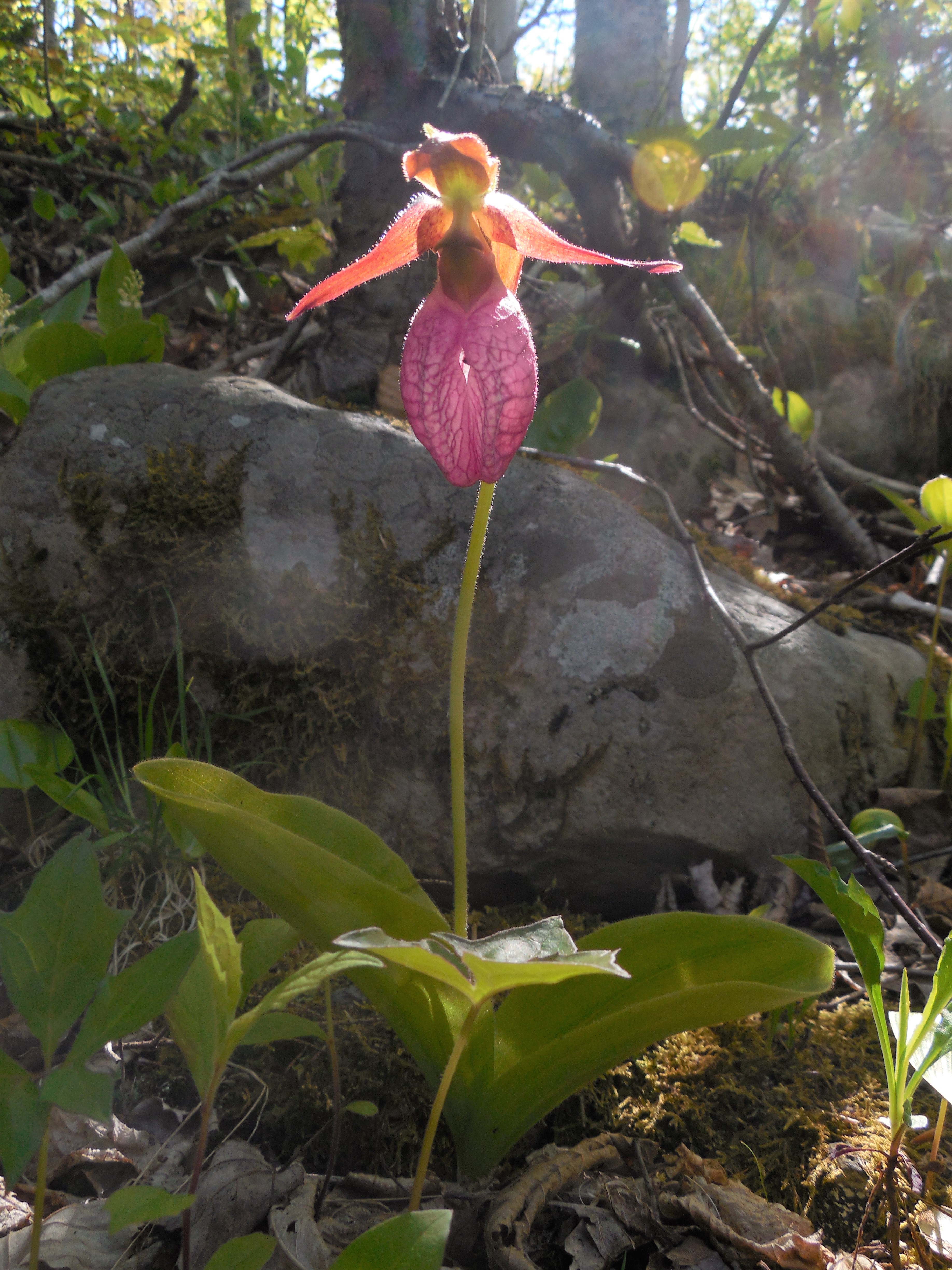
Cypripedium acaule

I was very fortunate to visit Nova Scotia in May, 2014--and I published a half dozen posts back then about that wonderful trip (click on that for one of them) and now I'm looking to go back this June I see in amazement that I never posted some of the best pictures: so here they are--beginning with this lady slipper--of which we saw dozens or maybe hundreds in the woods near Halifax.

 Aralia nudicaule
These pictures were all taken in some natural areas we visited back then: the gardens were better documented in previous blog posts: but I see I have a lot of images I never posted that give a good taste, perhaps, of what's in store in a few months for those of us who attend the meeting in Truro!

Cypripedium acaule

I must have taken a dozen pictures of these ladyslippers. Maybe two dozen! They were everywhere!

Ferns everywhere: not sure the species here...

Trientalis borealis

I cut my horticultural teeth ordering Eastern wildflowers to grow in a shady garden in Boulder, Colorado were I grew up. I grew this for many years.

Gymnocarpium dryopteris

High on my list of favorite plants: I grew its cousin (Gymnocarpium robertianum) well for years at the Gardens. And I'm determined to grow this one too!

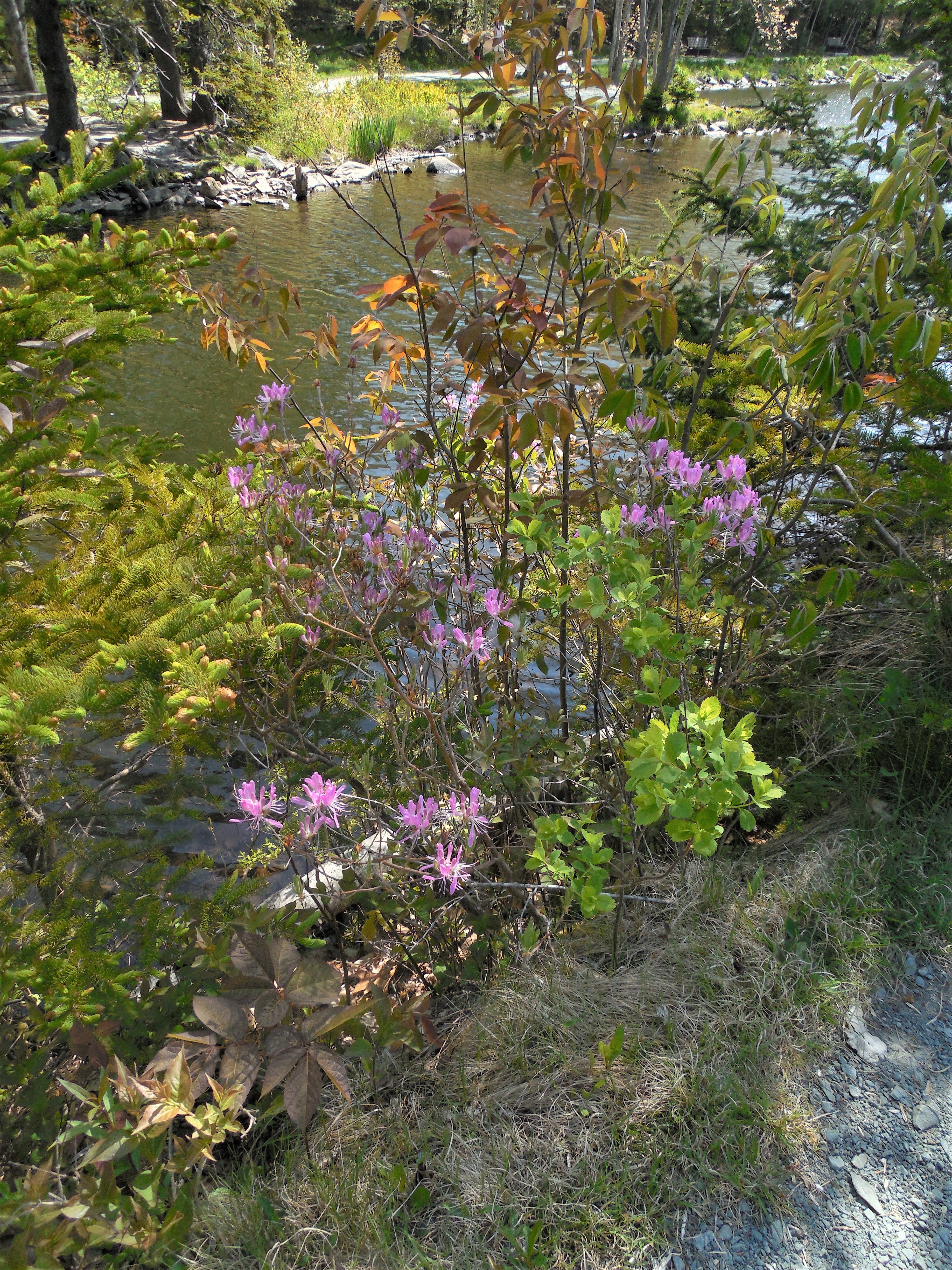
Rhododendron rhodora

I dedicated a whole blog post to this plant after my first Nova Scotia visit: a shimmering memory I will never forget!
Populus grandidentatum

So very different from our Rocky Mountain aspen: I must grow this one day!

Trillium undulatum
Alas, nowhere in my garden is it 1) acid enough 2) moist enough to make this gem happy. Fortunately there are a lot of trilliums that settle for me though. This (after T. nivale, which I can grow) is my very favorite.

Coptis trifolia

Another plant not destined for my garden. Wish the Coptis I can grow were this pretty!

Dryopteris spinulosa

Populus grandidentatum

LOVE the unfurling leaves on this poplar.  Yes...I must grow it! This year's Annual General Meeting in Nova Scotia is sure to be a gem--as they all are. I am so excited to see Bernard Jackson's masterpiece rock garden at the University in Truro once again, and the extraordinary limestone crevice garden extension they've put in since my last visit.

I was amazed by the incredible diversity of private gardens--many of which will be on tour. Early June will be peak bloom for Rhododendrons, rock and perennial gardens--all kissed by the cool, Maritime breath of the sea! Wouldn't miss this for the world--and hope to see you there...the QR code will take you to the registration page, or click right here! Be sure to watch Jamie Ellison's stunning video promoting the meeting--what a remarkably evocative landscape!


Featured Post

A garden near lake Tekapo

The crevice garden of Michael Midgley Just a few years old, this crevice garden was designed and built by Michael Midgley, a delightful ...

Blog Archive