Tuesday, October 12, 2021

Woodland gardening: "my soul under the trees doth glide"


Cypripedium guttatum on Serkyem La, Tibet
 As much as I love alpine heights, deserts and steppes, there is something about woodlands that I have always found alluring: when the spring ephemerals are at their peak, or when you find a throng of orchids blooming like this--well--what can I say? I can almost hear birds twittering in the background, and a cool breeze caressing my cheek!

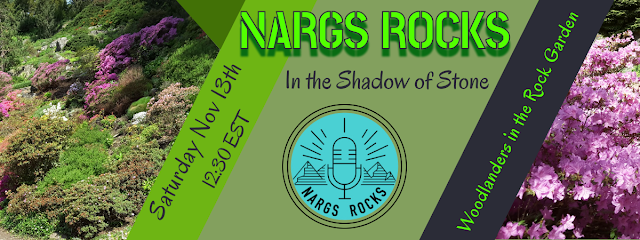
Do put this on your calendar please! Better yet, click HERE and sign up (it's a bargain!).  If you've clicked (as so sweetly asked you) you will see a stellar lineup of extraordinary gardeners who also happen to be cutting edge plant nerds and designers extraordinaire!  We'll talk about them a bit more in a while...but first let's extol the glories of gardening in shade, and in the shadow of stone! Rock gardening is often associated primarily with alpine plants--but even at alpine heights there are shadier slopes--and most of us live lower down--or even at sea level! Most of us deal with more and more shade as the trees and shrubs we keep planting grow larger and larger.

And truth be said, on a hot summer's day, the woodland is the best place to hang out! There are a vast throng of woodland plants of all sorts--and an array of strategies for growing these in gardens. I'm sure there's been a conference somewhere, somehow about woodland gardening. But N.A.R.G.S. webinars, well, they deliver the goods!
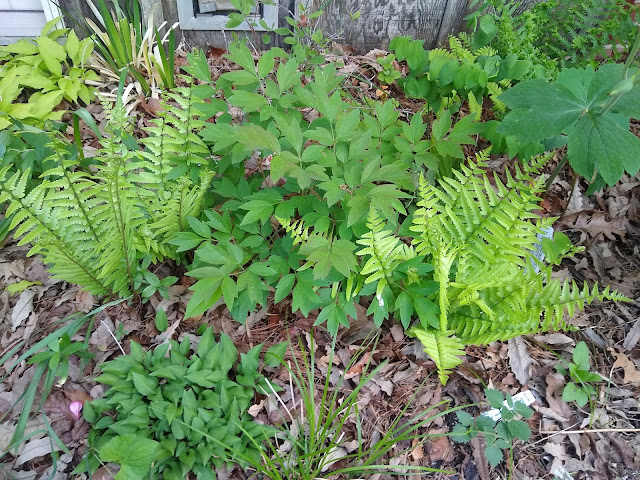
Dryopteris tokyoensis

I have shady corners here and there around my garden: and like most ever serious gardener, I've planted way too many trees!
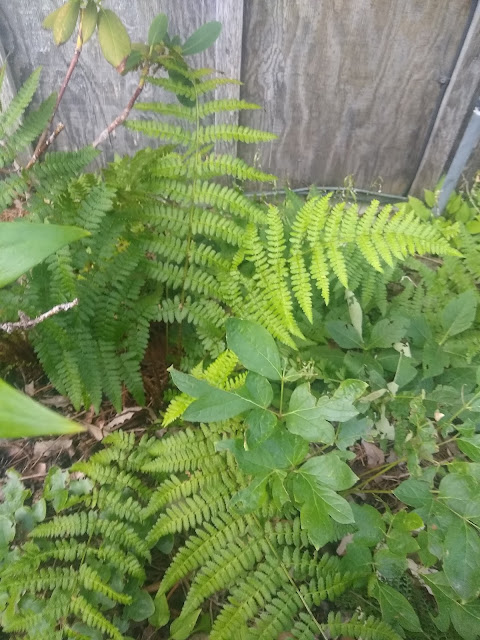
Dryopteris x remota

Sone of us are pteridophyles: I keep seeing how many more species I can sneak into this or that shady habitat!
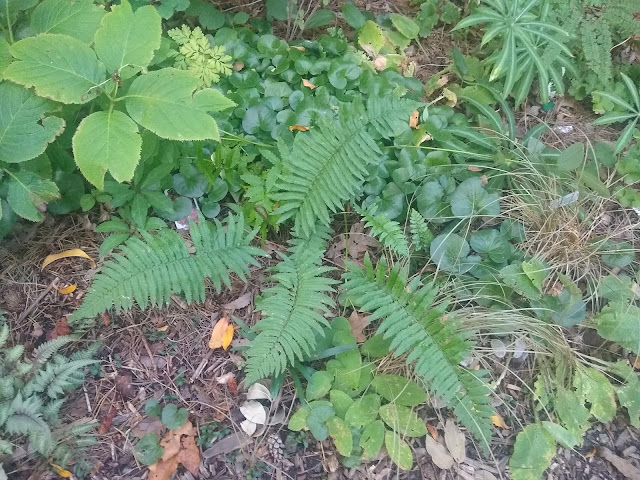
Dryopteris cycadina

This is one I found at Lowe's of all places! I keep going back to see if they haven't brought back some more--but no ferns this year. Shame on THEM!
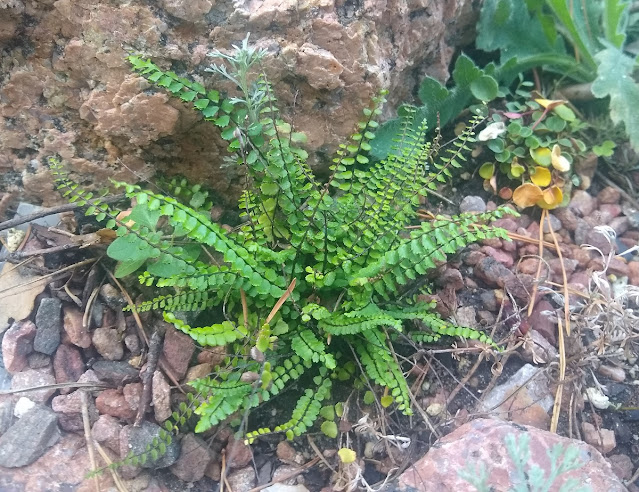
I have a special fondness for rock ferns...the maidenhair spleenwort  in particular. I'm thrilled to have three happy clumps in my shady rock garden.
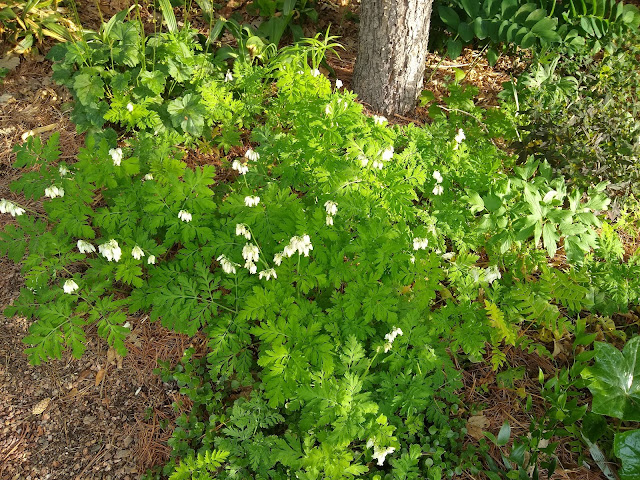
Dicentra formosa 'Purity'

The white flowered form of this Pacific Northwestern bleeding heart blooms for months in spring and summer--and spreads with long rhizomes. It has gone by several cultivar names--my favorite is 'Purity'.
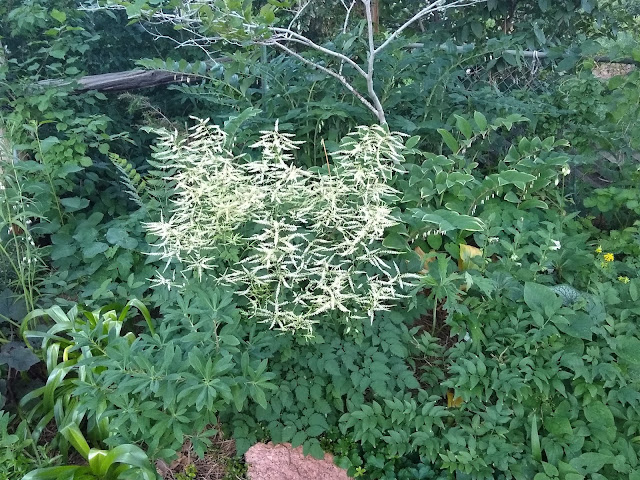
Aruncus x 'Zweiweltkind'

I must grow the "regular" species found across much of North America and Europe--although it is a space hog! I see it here and there in Denver gardens, so it can't be too hard to grow. This compact hybrid is much more manageable--but still a yard high or so...
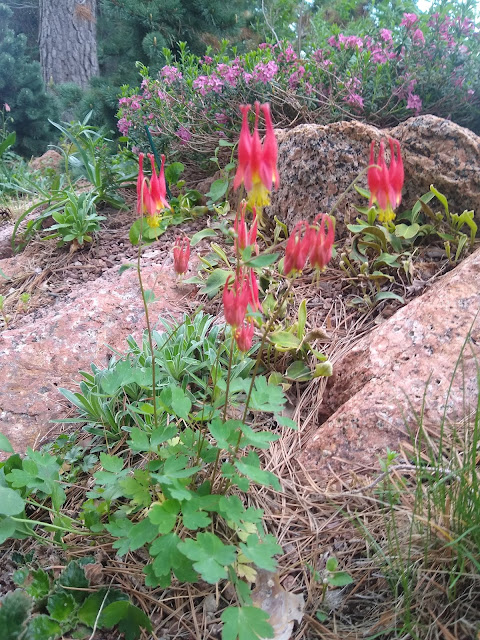
Aquilegia canadensis (dwarf form)

 Some of us never have enough columbines...the dwarfer the better!
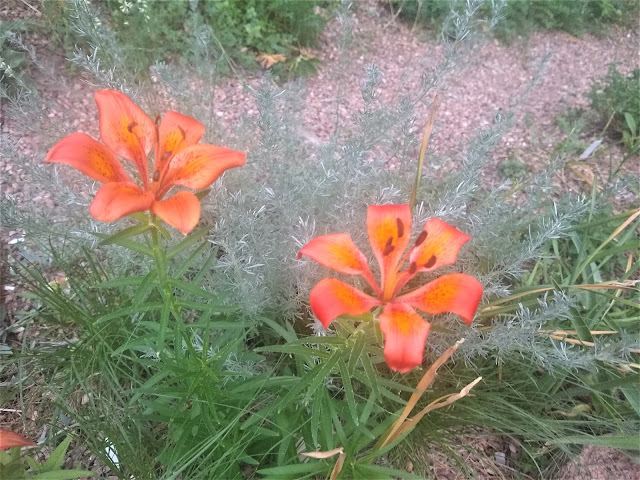
Lilium philadelphicum v. andinum

I have tried this in all sorts of "logical" spots--here out in a more open spot, maybe it will be more permanent!

Mertensia virginica

I finally seem to have gotten the eastern Virginia bluebells established. I've been warned it can be a bit of spreader: spread away, I say!
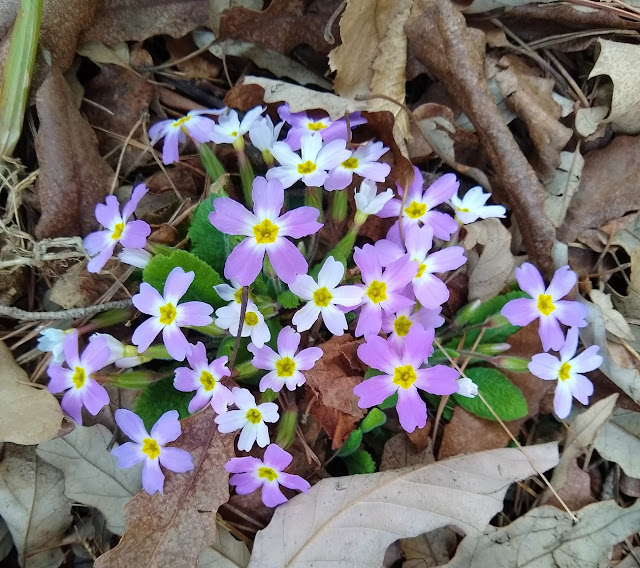
Primula woronowii

A memento from an unforgettable trip to the Caucasus. All the plants we saw of this in the wild had darker flowers...but I enjoy the way this one has flowers that change tint.

Sanguinaria canadensis 'Multiplex'

 I've lost my credibility with many visitors when I assure them each flower has a little LED light that makes it glow even brighter...I fear some believe me.
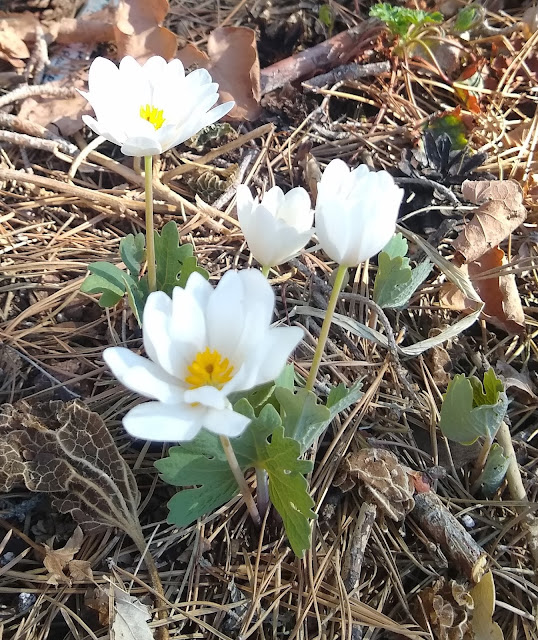
Sanguinaria canadensis 'Snow Cone'
And this year I grew a new bloodroot--semi-double. Never can have enough woodlanders! I wonder what new marvels I'll learn about on the NARGS webinar. Hope you join me and sign up!


Tuesday, October 5, 2021

Loss: let's roll back the God damn Anthropocene


Echinocereus viridiflorus

Believe it or not,  I have not one but three friends who regularly dig this cactus out of their lawns. Not lawns perhaps as much as somewhat groomed prairie--but they do dig these up (mercifully usually potting them up to share with the likes of me, who dotes on this strange morsel). Let's not talk about the countless other wildflowers displaced by the million homes built along the Front Range.

I should warn you: this is not going to be a "pretty pretty" blog about nice things. It's about loss. I know that in my lifetime millions of these hedgehog cacti have given way to homes from Pueblo to Fort Collins--the plant unwisely chose the piedmont of the Front Range as its preferred habitat. As a child, I used to marvel at vacant lots near my home that were carpeted with these--you couldn't step without crushing them (which is why my friends dig them up)....

Those vacant lots are all now mega mansions. I wish I'd dug every one  of these up in retrospect--the spination and flower color are so distinct from plant to plant. Every one crushed and destroyed: millions of them.

In the last year, I have watched many things I loved and admired be demolished: I probably don't need to detail what--since you, reader, probably have a similar list.  But here it is--so easy to type it out--but each of these things felt like a major felony in my personal Universe: the house I grew up in (where my family lived for 65 years) and where I built my first gardens had the whole yard converted to bluegrass. A store I drove past every day on the way to work cut down the outstanding specimens of mountain mahogany (Cercocarpus ledifolius ssp. intermontanus) I admired as I drove by--replacing them with nothing. The new owner of my first house removed a spectacular Mahonia fremontii and some dwarf conifers and wildflowers I'd planted 35 years ago leaving bare earth. New owners of a home a mile from my house I've blogged about destroyed the last vestiges of prairie there...In my private Universe, the last year I've seen a large number of the sacred touchstones of my personal landscape devastated--a sort of aesthetic equivalent of COVID-19 only affecting special plants.

I'm writing this because an airport is scheduled to expand and destroy a remarkable small prairie in Illinois: read about it in this Blog: Remnant Prairie Under Threat (Bell Bowl Prairie). The author of the Blog posted the image below--that tugged on my heart strings: like my little green-flowered hedgehog cactus that has had much of its range built over, there are just fragments of range where this gentian still grows in the vast Tall-Grass prairie region--99% of which was displaced by cornfields and Anthropocene constructions in the blink of a Geologic eye. Do we really want to see this little fragment destroyed to facilitate more Amazon shipping? While you're at it, join the Facebookpage dedicated to preserving this little prairie.

Gentiana puberulenta Photo by Cassi Saari

My most faithful Blog follower (James, where are you?) suggested I could perhaps blog or otherwise encourage to you speak up on behalf of this special spot. I think that if you read Cassi's blog, you too will be spurred to send a few letters on behalf of this special little spot. Will humans destroy everything that's special for "progress" and greed out of stupidity and ignorance? Incidentally, I've wanted to see this gentian for about five decades: had I read Cassi's blog a few months ago, I know I would have bought a ticket and flown out to see the place. If it's not destroyed by next August, I will go there (remind me, James!)

Haven't we paved over and destroyed enough? I cannot find it to end on, but a Modern Greek poet has a poem that starts "they're destroying everything picturesque": It is a heartbreaking lament on the devastation of the Anthropocene--which we all recognize as having gone way too far. It is the discordant, disturbing background music in the lives of anyone with half a heart and a fifth of a brain.

I have come to realize that the wellsprings of my life, my livelihood, my passion have been dedicated to mitigating, thwarting and seemingly vainly attempting to roll back the Anthropocene. One by one I feel we have lost so many battles. But by God, we must win the war.

Friday, September 24, 2021

A Steppe above! A magical garden in Boulder

 If there is a Deity, she must have a great sense of humor. I've known for a very long time that Peter and Cynthia Scott lived in Boulder not far from where I grew up. I knew they had to have a pretty amazing garden. But only this September did I finally take up their standing offer to visit. What I found was perhaps the most elegant, appropriate and ambitious garden I'd never dreamed existed exactly one mile due West of where I spent the first 25 years of my life.

I've known Cynthia for more years than either of us care to admit: her mother (Ann Young) is a fantastic gardener as well in Colorado Springs, and a long time friend. Cynthia has served on Denver Botanic Gardens' board for nearly two decades where she is now a Trustee Emerita and has chaired the Gardens' Gardens and Conservation Committe. She will be president of the Garden club of Denver in the coming year: just a few of her many civic commitments! When on earth does she have time to garden?

These are but a few shots taken on a much too bright day of the enormous garden she and her husband, Peter, have created. Growing up down Aurora street a ridiculously short distance away, I never dreamed such an extraordinary house and garden existed (they are tactfully hidden from the street, I might add!).

I don't have a clue what Allium that is: the garden possesses a wealth of unusual as well as classic garden plants all thriving in what must be some very good soil--and obviously good care! (I do hope she saves a pinch of seed from that onion, hint hint...)

Another view of Mystery Allium, gracefully accompanied by a ground cover of thyme (?) below and a stunning pale pink form of Silene schafta--which is ordinarily a harsh magenta. You won't find these plants (or the others in their garden) at your local Walmart. Or garden center for that matter!

A closer look at the Caucasian catchfly: Silene schafta is unusual in its enormous genus for blooming in late summer and autumn.

I was charmed to see a late blooming Townsendia parryi on the Steppe massif.

Slightly out of focus, but I had to include this delightful Turkish salvia (Salvia horminum a.k.a. S. viridis: botanists can't decide). It appears that it's naturalized--which is lucky since it's an annual.

I was impressed with this hefty mound of Petunia patagonica--an almost mythical Patagonian gem--this must be stunning in full bloom in spring (I hope I can time a re-visit in time to see it!)

What a gracefully situated tansy (or is it Artemisia?) I am not sure which genus or species--but what a cunningly placed plant.

I was delighted to see the enormous wands of Liatris ligulistylis waving gently in the breeze among the bold granite boulders of one of the Scott's rock gardens. Cynthia told me that this has attracted monarchs (which are generally not common hereabouts) almost every day it bloomed.

Surely one of the most imposing Liatris--they shone gloriously in the backlight during our visit. My puny plants at home had a good talking to later that day.

What a fabulous setting for a home and garden! The meadows full of pollinators demonstrating the Scotts' commitment to gardening responsibly in such a sensitive setting.

Everywhere I looked there were wonderful plant combinations--here the bright red berries of a Himalayan Ephedra with asters. The house peeking out from behind!

Another portion of the steppe garden, festooned with late summer gaillardias and little gems tucked in the crevices...

A variety of artful troughs filled with alpine treasures along one of the patios...

A series of terraces, many with a variety of apples, plums and all manner of heritage fruit trees--the "processing room" of the guest house was filled with baskets and containers brimming with the harvest! They were anxious to gather what they could: they have a veritable wild kingdom of wildlife (deer, rabbits, but especially bear, cougar, bobcat--you name it): too much windfall creates more problems!

The orange brick brought back associations with so many Edwardian and Victorian buildings of old Boulder--as well as whole neighborhoods I've seen on the Eastern seaboard and Britain: they've lovingly restored and preserved this historic home that has a long and rich local heritage.

And of course there are daphnes tucked in crevices of walls and the rock garden: the garden must be fragrant in the spring!

Although Ajuga isn't ordinarily my favorite genus, I wouldn't mind having a mat of this crisp leaved form in my garden!

Hakonachloa macra 'Aureola' grows fitfully for me: look how splendid it looks with those lichened boulders here!

The garden has a sense of quiet elegance and charm. One wants to sit on a bench and just relax!

So many interesting trees! An obviously quite old Catalpa--a genus which I love--but even my half acre garden isn't quite big enough for one. Here it fits in just fine~

Here are the talented couple in their bear-repelling apiary! Thank you both for creating such an extraordinarily bold, gorgeous and inspiring garden in my home town. Long may you (and your garden) flourish!

Thursday, September 23, 2021

Plant and Bulb EXTRAVAGANZA! D.B.G. fall sale!


 All year long people ask me: where can I get Orostachys spinosa? I'll tell you where: at DBG's annual fall bulb and plant sale TOMORROW (Friday, Sept. 24) and Saturday (Sept. 25): check the website for particulars (i.e., click on that last sentence!) It's FREE but you still need an advance reservation you can get at that clicked link!


 Just LOOK at all those adorable little Fibonacci balls, dying to grow in your alpine troughs and rock gardens! I just did a quick stroll through and saw WAY too many cool plants I'll be buying first thing in the morning! like our native pasqueflower (see below)

Everyone grows the vulgar European pasqueflower--but our elegant one is hard to find!


Or cool herbs, like this tough little Savory (Satureja montana)--


 Or what about this gorgeous Southwestern campion? (Silene laciniata)

 People tell me they can't find Anthemis marshalliana: well here it is--along with a lot of other cool Plant Select choices you won't find in many garden centers...

There are a good variety of super hardy Manzanitas...


This is a great time to plant Chocolate flower! (Berlandiera lyrata): a plant even the BLACKEST thumb can't kill! And it really does smell exactly like chocolate!


The tall bearded iris at this sale are well established and ready to take off in your garden! These are divisions from our best performers...


Did I mention Eremurus yet? They look like giant dried Octopus--but I promise you they're foxtail lilies--the best selection ANYWHERE! Dozens of selections!


More at another table...and another table...

Where else will you find our subalpine red columbine? (Aquilegia elegantula)

May I suggest you make a day of it? You can stash your plants after you've bought them with the plant-sitting table on the street and go back in and glory in the late summer/early autumn gardens. The plants are over the top!

And don't miss a visit to the Galleries in the Freyer-Newman center: I particularly loved Saito's stunning bronze cast natural arrays...

I hate to think how long I lingered over this one, imagining the patience it took to do each and every one of these marvelous miniatures...

And you too can take your friend's picture in front of the spectacular bronze Dragonfly wings! (In this case it was Steve Brack--perhaps the premier cactus and succulent seed purveyor of the last century)...

And if you're really smart, you'll sit down and watch the feature documentaries in the Sturm Auditorium--like the galleries, they're bundled in your entrance fee (which was free...did I mention?)...

Get your sweet little tushy down here, honey! You won't regret it!


Featured Post

Crime pays, gardens don't.

I apologize for "borrowing" Joey Santore's tagline--but it seems appropriate. And I think Joey would approve. What if I were t...

Blog Archive