I looked back in horror! I only began this Blog two or three months AFTER this magical trip was over...and the next year, when I went back, I never bothered to describe THAT trip to Kazakhstan and Mongolia either. Fortunately, the images are fresh, and the impressions vivid within me, so I make amends. Why part 2 then? It should be part five: it happens to be the first chunk of pictures I've uploaded from around July 10, 2009. I will restrain from too much commentary--or I'll never get the other pictures done! The picture above was taken after we'd crossed the high pass: we're very near China and Kazakhstan at this point, but still in Mongolia--easy to find on a map! Those camels carried our gear (thank you camels!).
 |
| Eurybiam (Aster) sibirica |
Mark McDonough will not approve because I don't show the whole plant--but I'm rather proud of this picture and will probably make it my Facebook header when this posting comes out. You'll see some of the other players in this picture in a bit!
I love this shot: the most elemental of rock gardens. By the way, this is the part of Mongolia where "the Eagle Huntress" was shot--one of the best movies I've seen in the past year--do check the movie out to see the amazing life the regional Turkic people lead. Progress may not be so progressive.
 |
| Saussurea alpina |
There are seven or eight Saussureas in this region, and this one seems closest to the widespread Eurasian species.
 |
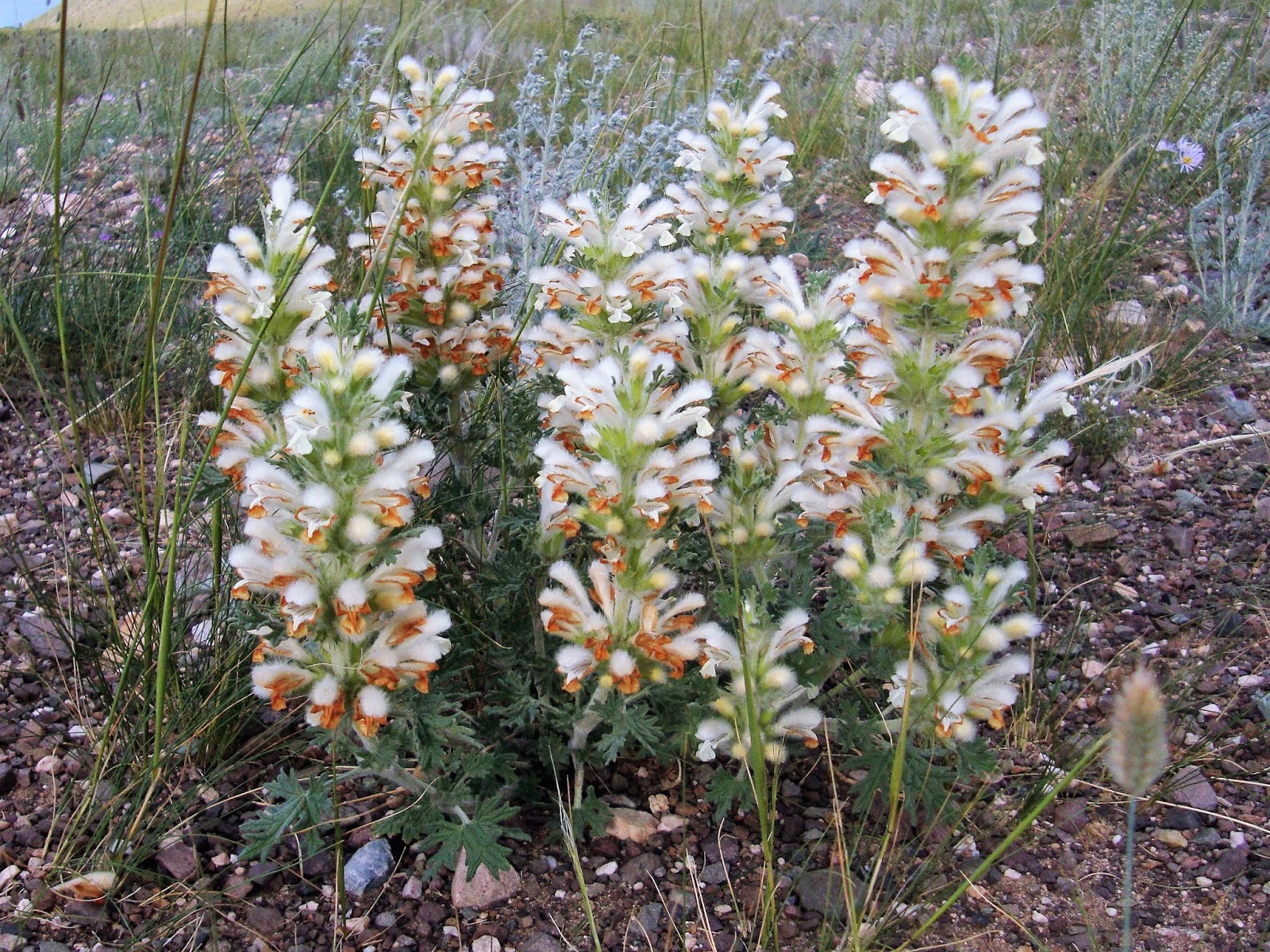
| Dracocephalum grandiflorum |
I've grown this once or twice in my garden and gave up. Then Mike Bone planted it in the Steppe garden at Denver Botanic Gardens where it seems to be thriving: go figure! The most magnificent of Dragonheads. It was everywhere in the Altai at altitude.
 |
| Dracocephalum grandiflorum |
 |
| Crepis chrysantha |
I'm pretty sure of the identification. Some fuddy duddy will say "looks just like a dandelion" (there's oa killjoy in every crowd).
 |
| Allium amblyophyllum |
Won't swear to the I.D.--but if it's not this species it's close. We saw dozens of Alliums on this trip, one lovelier than the next.
 |
| Swertia banzragczii |
Not your typical gentian. The range of swertias in Asia is amazing. We saw one in Pakistan that looked and grew just like a crocus! Their VERY close cousins in the Rockies (the Fraseras--which I think are really Swertias) are stunningly variable, including some remarkable xerophytes.
 |
| Persicaria bistorta (elliptica) |
Very similar to our alpine bistort in the Rockies--one of dozens of close parallels.
 |
| Aconogonon (Polygonum) divaricatum |
The various polygonaceous herbs with feathery flowers were striking in both the Altai and the Tian Shan--many would make wonderful garden plants.
 |
| Ligularia altaica |
I saw a remarkable range of ligularias in the Reykjavik Botanic Garden--not quite in bloom at about the same time of year. I believe this was one of them: I'd love to try this in my garden.
 |
| Juniperus pseudo-sabina |
I am quite sure we saw several species of carpeting Juniper, though this seems to be the predominant species--here covered with male strobili...
 |
| Juniperus pseudo-sabina |
 |
| Juniperus pseudo-sibina |
And here's the girl: suspiciously similar to
Juniperus communis in Colorado.
 |
| Papilio machaon |
|
The common swallowtail of Eurasia also occurs in the Rocky Mountains, albeit in a slightly different color phase and subspecies.
Here it is featured on a Mongolian stamp:
 |
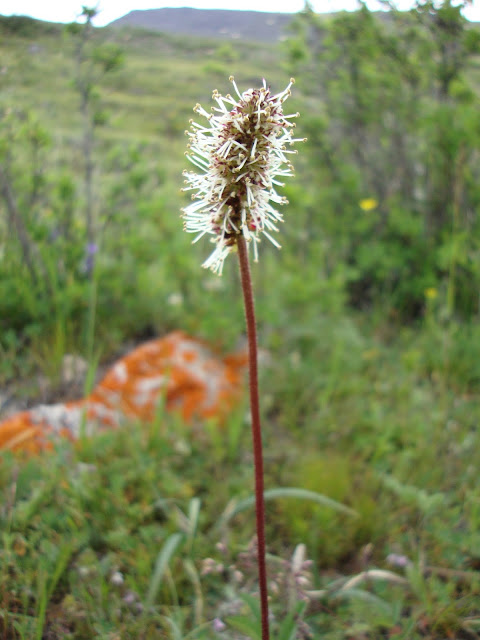
| Pedicularis rhinanthoides |
Quite a few pedicularis--this being one of the most distinctive.
 |
| Sanguisorba sp. ign. |
The views and vistas were enchanting. Fun to watch the horsemen ford the streams. There weren't bridges hereabouts! Don't ask how we did it.
 |
| Rheum altaicum |
The rhubarbs were dotted here and there--never abundant. I believe they've been pretty heavily impacted by humans over the millennia.
 |
| Sedum (Hylotelephium) ewersii |
On our next trip we saw this in glorious bloom--the stem is from last year's flowering--a fabulous saxatile plant.
There's always thyme! As this blog proves.
Thymus cf altaicus (praecox)
There's always "thyme" as this post proves!
 |
| Veronica porphyrantha |
One of the gems we managed to tame from this trip. A striking veronica.
 |
| Campanula albovii |
I grew this in the 1980's from a Russian Botanic garden--and would love to again. A large flowered, graceful montane plant. May actually be
C. altaica...
 |
| Geranium collinum |
One of several geraniums we saw on the trip--and a lovely one.
 |
| Woodsia alpina |
It could be
Woodsia ilvensis: ferns are as rare and elusive in the Altai as they are in the Rockies--so we're always thrilled to find one.
I love to see the root systems on trees--pretty skimpy really for the size of the trunk.
I love the fairy ring on the juniper here. Very different morphology on the plants--I suspect several species are in play.
Just in case you thought it was all a picnic--the mosquitos in one area were horrendous--but strangely few bites. Truth be said, we only encountered them in one small stretch. It was pretty idyllic.
There's Mike--you can see how he's suffering.
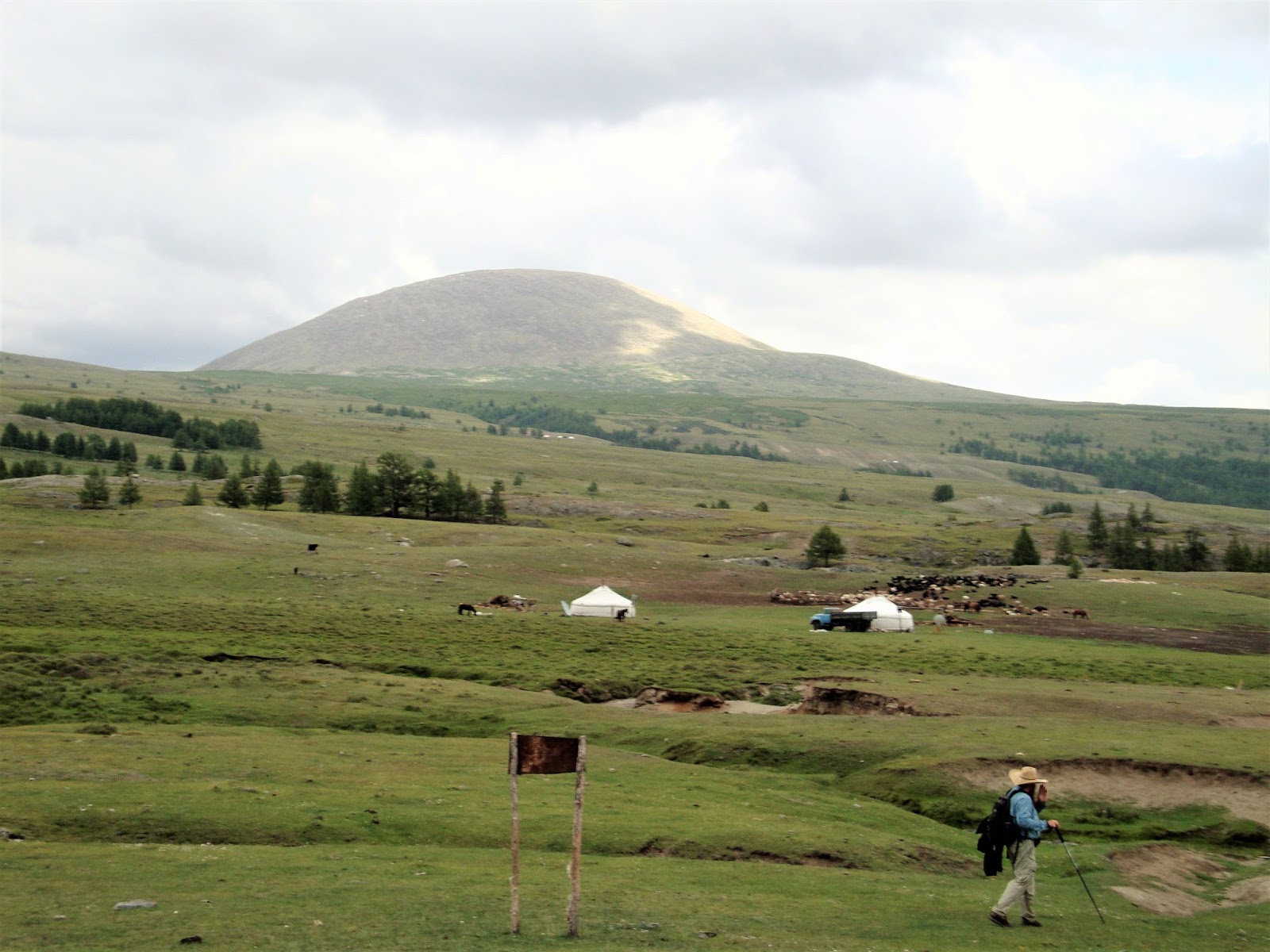
And we descend to our last camp...near the borders. After dozens of miles of pristine mountains, the herding masses of livestock have appeared. But then, these landscapes have always had many ungulates--and the sheep and goats and cattle are pretty much in the same mode...
The border between the National Park? China? Kazakhstan? I wish I could remember...
Here is the border between the grazed bit, and that waiting for winter pasture. And so ends the second of many postings I hope I may unroll as the winter passes from one of the most enchanting expeditions I have ever been on.
(The trip was funded by
Plant Select, q.v., and undertaken under the auspices of Denver Botanic Gardens. I am deeply grateful to both organizations for providing me the opportunity to visit this part of the world not once, but twice!)






%20-%20Copy.JPG)
